This content is in French.
Beyond the Sensor: The Potential Impact of Continuous Glucose Monitoring Alerts on Glycaemic Control
5 octobre 2026
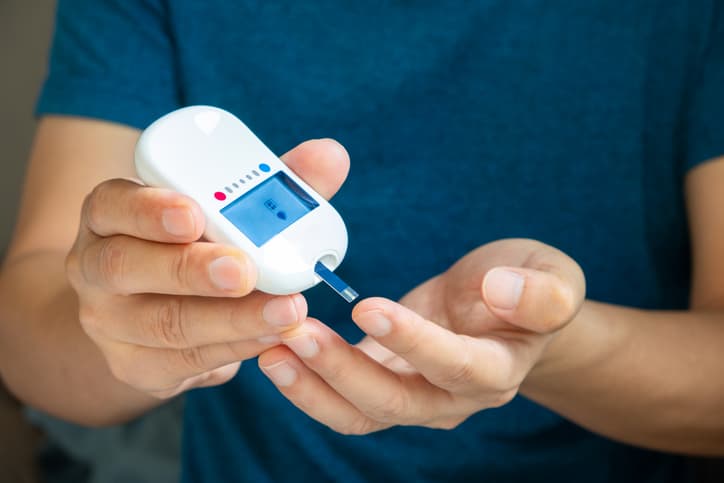
Why CGM alert settings matter
Continuous glucose monitoring (CGM) is now
standard care for people with type 1 diabetes (T1D) and many individuals with
insulin-treated type 2 diabetes (T2D), supported by evidence that it improves
glycaemic management. Real-time CGM systems offer multiple customizable alerts,
including high-glucose, low-glucose, urgent-low and rate-of-change alarms.
However, there is comparatively little evidence to guide clinicians on how
these should be configured. This is particularly relevant in primary care,
where CGM prescribing is increasing but familiarity with device-specific alert
settings may vary.
In this 2026 JAMA Network Open
research letter, Zheng and colleagues investigated whether the use and
thresholds of CGM alerts were associated with clinically important glucose
metrics. Their findings suggest that alert configuration is not simply a
usability preference: different settings may be associated with distinct—and
sometimes competing—effects on hyperglycaemia and hypoglycaemia.
Sign in to read the rest
Reserved for healthcare professionals, free registration.
Scientific reference
Zheng Y, Johnson SB, Iturrate E, et al. Continuous Glucose Monitoring Alert Settings and Glycemic Control in People With Diabetes. JAMA Netw Open. 2026;9(9):e2635687. doi:10.1001/jamanetworkopen.2026.35687
View the source