By Ana Espino | Published on August 05, 2025 | 2 min read
#Jellyfish #Collagen #Cosmetics
#Biomaterial
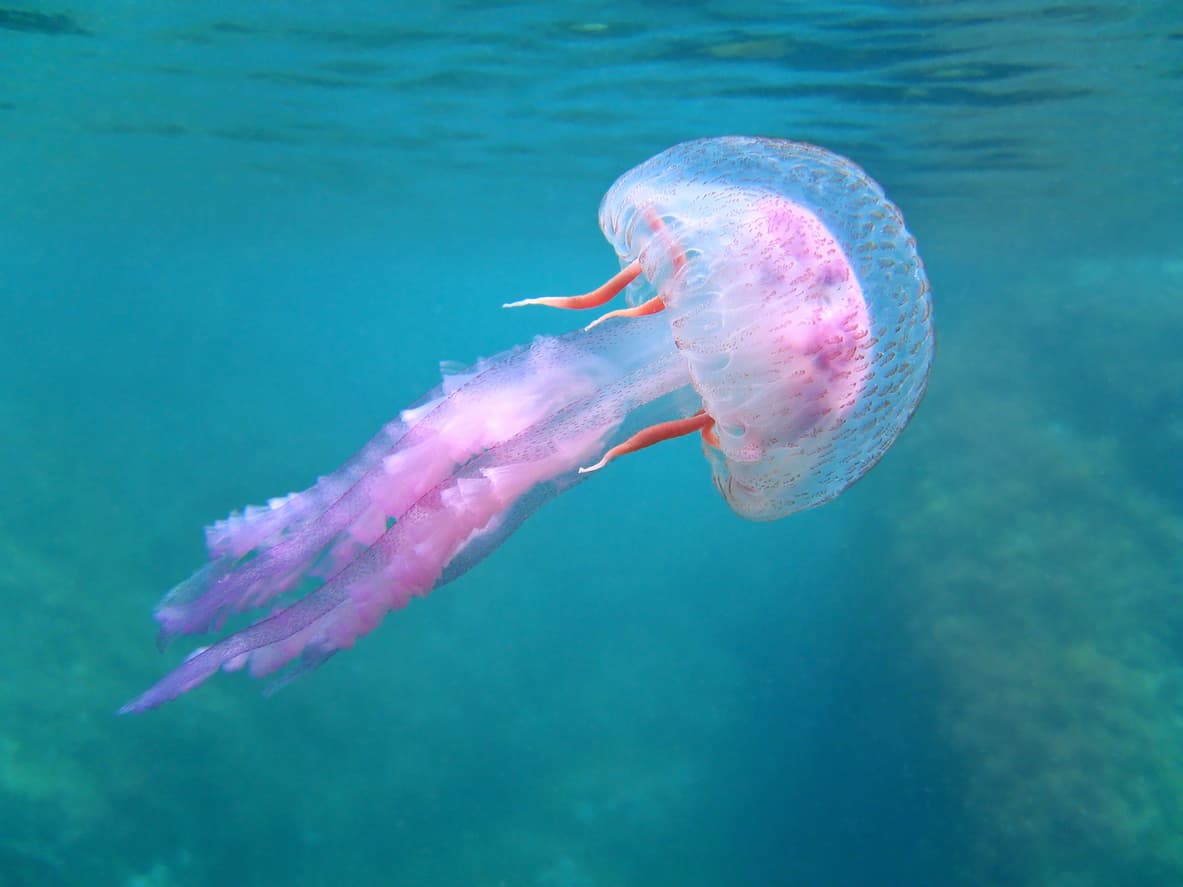
Jellyfish, often perceived as a
nuisance, are proliferating massively in the Mediterranean due to climate
change and overfishing. This demographic explosion raises ecological and
economic concerns. However, it could also represent an
unprecedented biotechnological
opportunity, notably through the exploitation of the
collagen they contain.
Collagen, widely used in the
biomedical and cosmetic industries, currently comes primarily from bovine,
porcine, or traditional marine sources, with ethical, religious, and zoonotic
risks. Jellyfish collagen (particularly Rhizostoma pulmo) appears as a
promising, biocompatible, sustainable alternative with no known zoonotic risks.
However, its valorization remains
limited by a
lack of standardization,
toxicological data, and understanding of
its biochemical properties compared to conventional collagens. In this context,
this study was initiated to explore the
potential of jellyfish collagen as a
sustainable biomedical and cosmetic resource, assessing its structural
properties, applications, and the technical barriers to overcome.
Is jellyfish collagen ready for labs
and creams?
Experimental results—from projects like GoJelly, Blue Bio Med, and
MED-JELLYRISK—confirm the multifunctional potential of collagen extracted from
jellyfish, particularly Rhizostoma pulmo. This collagen stands out for
its high biocompatibility, low immunogenicity, and ability to support cell
proliferation, making it suitable for applications in cell culture,
regenerative medicine, and skin engineering. It can be transformed into
hydrogels, membranes, sponges, or 3D matrices, offering great formulation
flexibility. Additionally, its gelling, film-forming, and moisturizing
properties open promising prospects in natural cosmetics and the development of
innovative dermatological care products.
Nonetheless, several obstacles
hinder its large-scale integration: the
lack of industrial production
standards, significant
variability between species and batches, the
seasonality
of the resource, and
the lack of toxicological and clinical data required for
regulatory approvals in human health.
A marine resource to tame
The massive accumulation of jellyfish in the Mediterranean, often seen as an
ecological nuisance, raises major environmental management issues. However,
recent studies suggest they could also become a valuable source of
biomaterials, particularly in the form of collagen. The main challenge lies in
the industrial valorization of this still underutilized biomass. The absence of
standardized production protocols, interspecific variability, seasonality of
harvests, and regulatory uncertainties currently hinder its integration into
biomedical and cosmetic industries.
This review aimed to assess the
current knowledge about jellyfish collagen, analyzing its
biochemical
properties, application potential, and the obstacles to be overcome for its
implementation. The available data confirms that it is a
promising material:
biocompatible, low in immunogenicity, adaptable into various formats
(hydrogels, membranes, films), and suitable for use in regenerative medicine
and dermocosmetics.
Building on these advancements,
transforming jellyfish collagen into a
sustainable industrial resource will
require
close coordination between
scientific research,
process engineering,
and
regulatory validation to make it a true driver of
circular innovation.
Read next: Essential oils and skin: the synergy of plants and nanoscience
About the author – Ana EspinoPhD in Immunology, specialized in Virology
As a scientific writer, Ana is passionate about bridging the gap between research and real-world impact. With expertise in immunology, virology, oncology, and clinical studies, she makes complex science clear and accessible. Her mission: to accelerate knowledge sharing and empower evidence-based decisions through impactful communication.