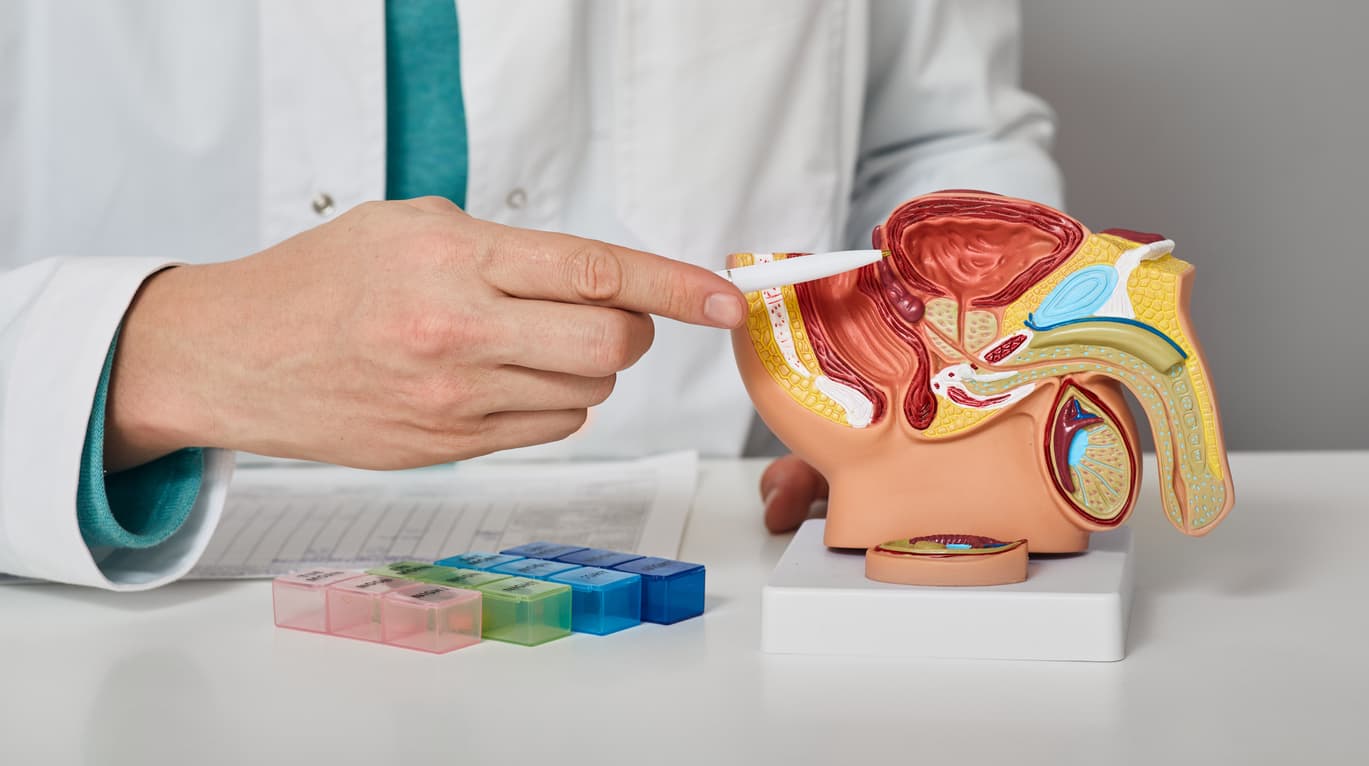
By Carolina Lima | Published on November 20, 2025 | 3 min readThe digital rectal exam (DRE) has historically
been a key tool in the early detection of prostate cancer (PCa). Before the
widespread use of prostate-specific antigen (PSA) testing, DRE was the primary
method for identifying potentially aggressive tumors. PSA transformed early
detection by identifying cancers even in asymptomatic men, leading to a shift
in screening practices. As PSA became standard, the value of DRE in routine
screening has been increasingly questioned.
Despite this shift, some guidelines—like those
from the French Urology Association (AFU)—still recommend combining DRE with
PSA. This review revisits the evidence, focuses on findings from the European
Randomized Study of Screening for Prostate Cancer (ERSPC), Rotterdam study, to
assess whether DRE remains relevant in today’s screening protocols.
Insights from the ERSPC Study
The ERSPC, one of the largest and most
influential trials in prostate cancer screening, involved over 180,000 men
across eight European countries. Its findings showed a 21% reduction in
prostate cancer mortality in the PSA-screened group. DRE was initially included
in screening protocols but was gradually discontinued. By the late 1990s, many
centers had stopped performing DRE altogether, especially for men with PSA
levels below 1 ng/mL.
The ERSPC investigators conducted several
analyses to evaluate DRE’s utility. One early study found that DRE had a low
positive predictive value, particularly in men with PSA levels under 4 ng/mL.
In fact, hundreds of DREs were needed to detect a single clinically significant
cancer in this group. Many of the tumors identified were small, low-grade, and
likely false positives.
Limitations of DRE
Several studies cited in the review highlight
the limitations of DRE:
- Poor reproducibility: Results vary widely, even among
experienced urologists.
- Limited value in low PSA levels: DRE failed to reliably detect significant
cancers when PSA is below 4 ng/mL.
- Reduced screening participation: Up to 22% of men decline screening
when DRE is included, due to discomfort or reluctance.
Selective use vs. routine screening
While some guidelines, like those from the
French Urology Association (AFU), still recommend combining DRE with PSA,
evidence shows limited added value. While DRE may help identify high-grade
cancers when combined with elevated PSA levels, DRE rarely detects aggressive
cancers on its own, especially in men with PSA between 2–3.9 ng/mL.
Later ERSPC
findings confirmed PSA’s superiority: lowering the PSA threshold to 3 ng/mL and
removing DRE improved accuracy and reduced unnecessary biopsies. By the third
screening round, PSA alone accounted for 97–98% of cancer detections, with DRE
contributing only 2–3%.
Global Trends
Large trials like The Göteborg (Sweden) and the
CAP (UK) studies relied solely on PSA testing and confirmed its effectiveness
in reducing prostate cancer mortality. In contrast, the PLCO trial (U.S.)
included DRE but found no added survival benefit, suggesting DRE contributes
little to PSA-based screening.
Some studies, like those by Borden et al.,
suggested that DRE might help identify high-grade cancers. However, these
findings are mostly from diagnostic—not screening—and reproducibility remains a
concern.
Conclusion: moving toward PSA-based screening
Evidence from ERSPC and others consistently
shows that DRE adds little value to prostate cancer screening when PSA testing
is available. While it may still have value in specific diagnostic scenarios,
its routine use in screening is increasingly hard to justify. PSA testing
offers greater accuracy, consistency, and patient comfort.
Future screening strategies should focus on
personalized approaches using PSA levels and individual risk factors,
minimizing unnecessary procedures. The review concludes that in regions with
established PSA protocols, DRE no longer needs to be a standard part of
screening.
Read next: Can the tumor transcriptomic profile predict immunotherapy efficacy?
About the Author – Carolina Lima
Anaesthesiology specialist
Carolina is a specialist in Anaesthesiology with a deep passion for learning and sharing medical knowledge. Dedicated to advancing the field, Dr. Lima strives to bring fresh, evidence-based insights to the medical community. Viewing medicine not merely as a profession but as a lifelong journey of continuous learning, Dr. Lima is committed to making complex information clear, practical, and useful for healthcare professionals around the world.