#Fibromyalgia #Sleep #Fatigue #Physiotherapy
#Relaxation #CombinedCare
Fibromyalgia is a complex chronic syndrome
characterized by
widespread musculoskeletal pain, persistleep
disturbances,ent fatigue, s and a broad range of symptoms including cognitive, digestive, and
autonomic disorders. This condition predominantly affects women, often between
the ages of 30 and 55. It has a
profound impact on quality of life, autonomy,
and psychological well-being.
Despite international recommendations
advocating for a multidisciplinary approach, the management of fibromyalgia
remains a
therapeutic challenge. Patient adherence is often hindered by the
chronic nature of symptoms and the absence of a curative treatment.
Furthermore, the available pharmacological options—analgesics, antidepressants,
anticonvulsants—demonstrate
limited effectiveness on functional dimensions and
fatigue.
In this context,
non-drug approaches are
gaining traction. Among them,
intrinsic relaxation—based on controlled
breathing, body awareness, and sensory listening—is increasingly being
integrated into complementary care strategies. Often positively received by
patients, it remains
poorly documented in scientific literature in terms of
measurable efficacy. This study was initiated to compare the impact of a guided
relaxation program versus a supervised multidisciplinary treatment on two key
symptoms of fibromyalgia:
sleep and
fatigue.
Supervised care or guided autonomy?
In this study,
60 patients with fibromyalgia
were selected and randomly divided into two groups:
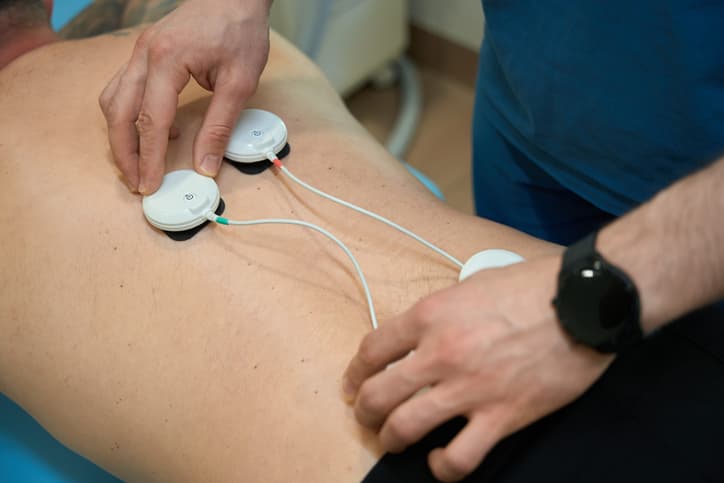
- Group EG1: inpatient care including physiotherapy,
hydrotherapy, electrotherapy, massage, and guided exercises (2 weeks);
- Group EG2: daily intrinsic relaxation at home,
using the Parow method (20 minutes/day).
Evaluations were based on the
Fatigue Severity
Scale (FSS) and the
Pittsburgh Sleep Quality Index (PSQI).
Among hospitalized patients,
a significant
improvement was observed. The
FSS score decreased notably, and
overall sleep
quality improved according to the PSQI. These improvements included
better
sleep efficiency, longer duration, reduced latency, and less use of sleep aids.
In contrast, patients who followed the home
relaxation program experienced
very limited effects. The
FSS score remained
stable with no significant change. The
PSQI showed a slight, non-statistically
significant improvement. Lastly, no noticeable change was observed in
functional capacities during the day.
Read next: Fibromyalgia: It may be of autoimmune origin!
Structuring care for better relief
Fibromyalgia is a chronic condition marked by
diffuse pain, persistent fatigue, and sleep disturbances, with
pathophysiological mechanisms still poorly understood. One of the main clinical
challenges lies in the
complex interaction between autonomic imbalance, sleep
deterioration, and the perception of fatigue, forming a vicious cycle that is
difficult to break. Given the limited effectiveness of pharmacological
treatments alone, the search for complementary, accessible, and well-tolerated
strategies becomes essential.
The aim of this study was to
compare the impact
of a multidisciplinary inpatient treatment to that of a guided home relaxation
program on two key aspects of fibromyalgia: fatigue and sleep quality.
The results show that
a structured approach in
a specialized facility leads to significant improvement in fatigue and sleep,
in contrast to autonomous relaxation, whose effects were minimal. These
findings confirm the
superiority of a comprehensive therapeutic
strategy—combining physical, sensory, and educational interventions—over an
approach focused solely on subjective well-being.
However, interpretation of the results must
consider several limitations: the short duration of the intervention (two
weeks), the small sample size, and the lack of longitudinal follow-up. These
factors limit the generalizability of the conclusions.
Further studies over longer periods and
including evaluations of psychological, neurophysiological, and functional
parameters will be necessary to validate these results on a larger scale. These
perspectives underscore the importance of developing combined, personalized,
and sustainable care pathways for more complete and effective management of
fibromyalgia.
Read next: Physiotherapy in musculoskeletal disorders