This content is in French.
Holiday weight gain: small indulgences, big effects?
2 janvier 2026
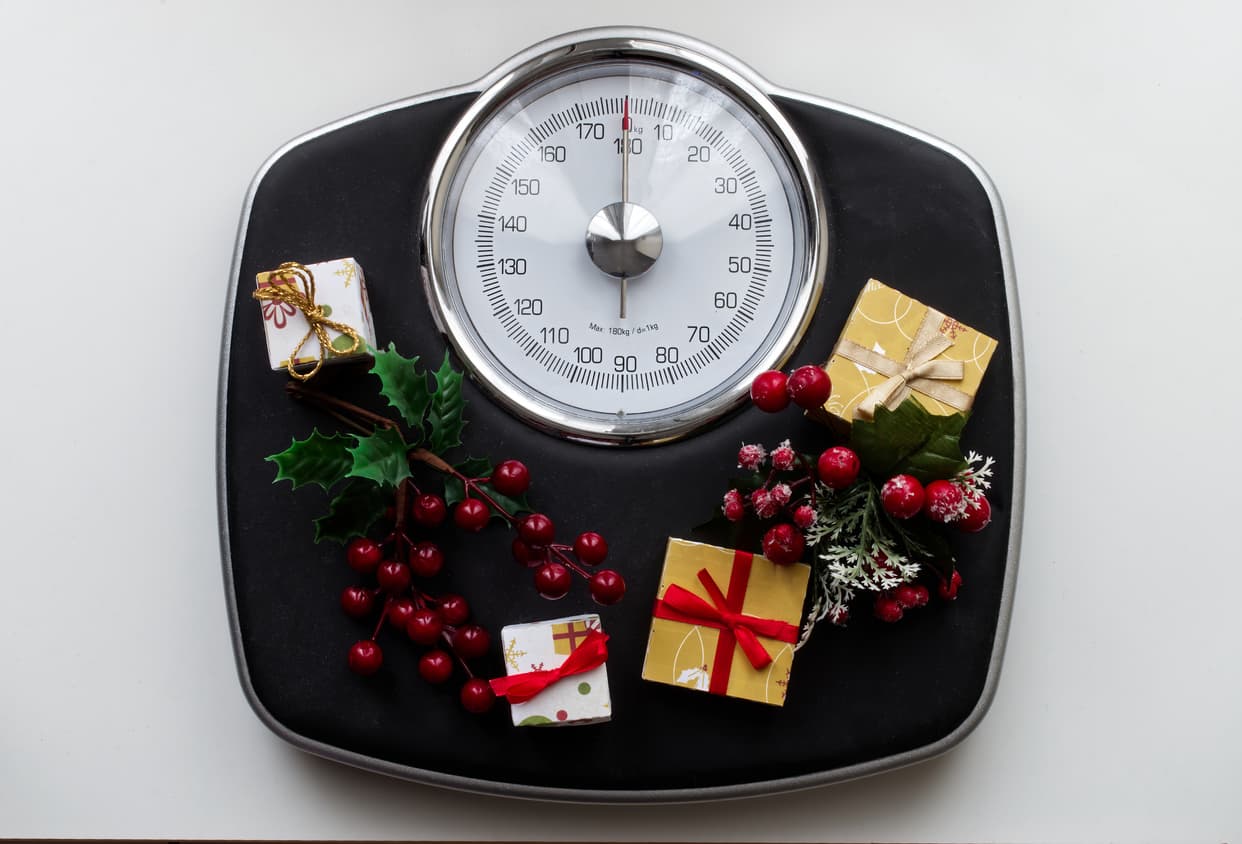
By Ana Espino | Published on January 2, 2026 | 3 min readEvery year, holiday periods—particularly Christmas, New Year’s, Thanksgiving, or Golden Week—are associated with social gatherings, rest… and often dietary excess. Many adults report slight weight gain during these festive periods. Although this phenomenon is widely acknowledged anecdotally, it has rarely been quantified rigorously. Yet even
By Ana Espino | Published on January 2, 2026 | 3 min read
Every year, holiday periods—particularly Christmas, New Year’s, Thanksgiving, or Golden Week—are associated with social gatherings, rest… and often dietary excess. Many adults report slight weight gain during these festive periods. Although this phenomenon is widely acknowledged anecdotally, it has rarely been quantified rigorously.
Yet even modest weight gain, if repeated annually, could represent a silent but powerful mechanism of progressive weight increase, contributing to the rising prevalence of overweight and obesity in the general population.
Every year, holiday periods—particularly Christmas, New Year’s, Thanksgiving, or Golden Week—are associated with social gatherings, rest… and often dietary excess. Many adults report slight weight gain during these festive periods. Although this phenomenon is widely acknowledged anecdotally, it has rarely been quantified rigorously.
Yet even modest weight gain, if repeated annually, could represent a silent but powerful mechanism of progressive weight increase, contributing to the rising prevalence of overweight and obesity in the general population.
Sign in to read the rest
Reserved for healthcare professionals, free registration.
Scientific reference
Helander, E. E., et al. (2016). Weight gain over the holidays in three countries. New England Journal of Medicine, 375(12), 1200-1202
View the source