This content is in French.
New perspectives in vaccines for cancer
5 octobre 2026
The JAMA translational science review
“Vaccines for Cancer” published in September 2026 examines the rapidly evolving
role of vaccines in cancer prevention and treatment. After decades of limited
therapeutic success, progress in tumour immunology, antigen discovery, genomic
sequencing, and vaccine-delivery technologies has renewed interest in cancer
vaccination. More than 2,000 immunogenic tumour-associated proteins or antigens
have now been identified, and current strategies span broadly applicable
shared-antigen vaccines through to fully individualized neoantigen vaccines.
Cancer vaccines share three fundamental
components: an antigen, an adjuvant that stimulates immune activation, and a
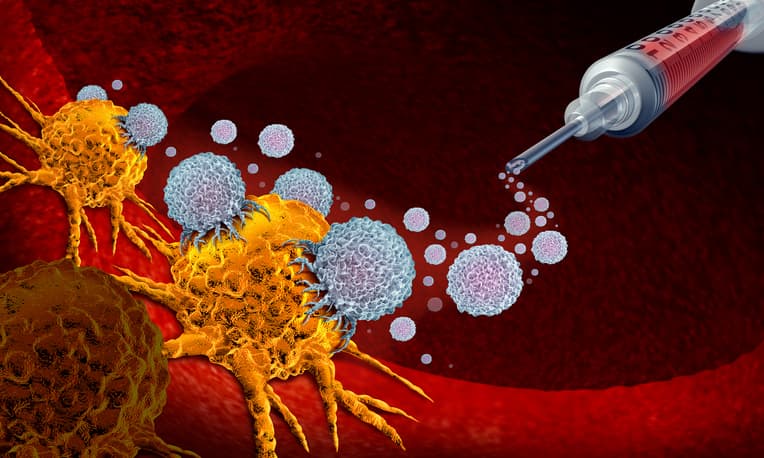
delivery vehicle. Therapeutic vaccines aim to generate adaptive immunity by
activating antigen-specific CD4+ and CD8+ T cells, as well as B cells.
Antigen-presenting cells such as dendritic cells capture vaccine antigens,
migrate to lymph nodes, and prime lymphocytes, which subsequently recognize and
destroy antigen-expressing tumour cells. Unlike the rapid but short-lived
innate response, adaptive immunity can be highly specific and durable.
Preventive vaccination is already
established for infection-associated malignancies. HPV vaccination reduces the
risk of HPV-related cancers, while hepatitis B vaccination lowers
hepatocellular carcinoma risk. However, because only about 13% of cancers have
an infectious aetiology, most investigational cancer vaccines target tumour-derived
cellular antigens rather than pathogens.
Several immunologically mediated approaches
are already approved for established cancer. Sipuleucel-T, an autologous
cellular vaccine targeting prostatic acid phosphatase, improved overall
survival in metastatic castrate-resistant prostate cancer; 36-month survival
was 32% versus 23% with placebo (HR 0.78, 95% CI 0.61-0.98, p = 0.03), although
progression time was not significantly improved. Talimogene laherparepvec
(T-VEC), an intratumoral oncolytic herpes simplex virus encoding
granulocyte-macrophage colony-stimulating factor (GM-CSF), achieved a durable
response rate of 16.3% versus 2.1% with GM-CSF in unresectable melanoma (16.3%
[95%CI, 12.1%-20.5%] vs 2.1% [95%CI,0%-4.5%]; odds ratio, 8.9; p < .001) and
generated evidence of systemic T-cell activation. Intravesical BCG (attenuated Mycobacterium
bovis) remains an important immune-based treatment for high-risk
non–muscle-invasive bladder cancer, while nadofaragene firadenovec, an intravesical
adenoviral vector encoding interferon alfa-2b, is approved for BCG-unresponsive
disease.
Sign in to read the rest
Reserved for healthcare professionals, free registration.
Scientific reference
Disis ML, Chun BMN, Dhillon KK, Liao JB, Hunter N, Cecil DL. Vaccines for Cancer: A Translational Science Review. JAMA. Published online September 21, 2026. doi:10.1001/jama.2026.15540
View the source