This content is in French.
Caring for the Oldest Old: How Family Caregiving Reshapes Daily Life, Health and Work
6 octobre 2026
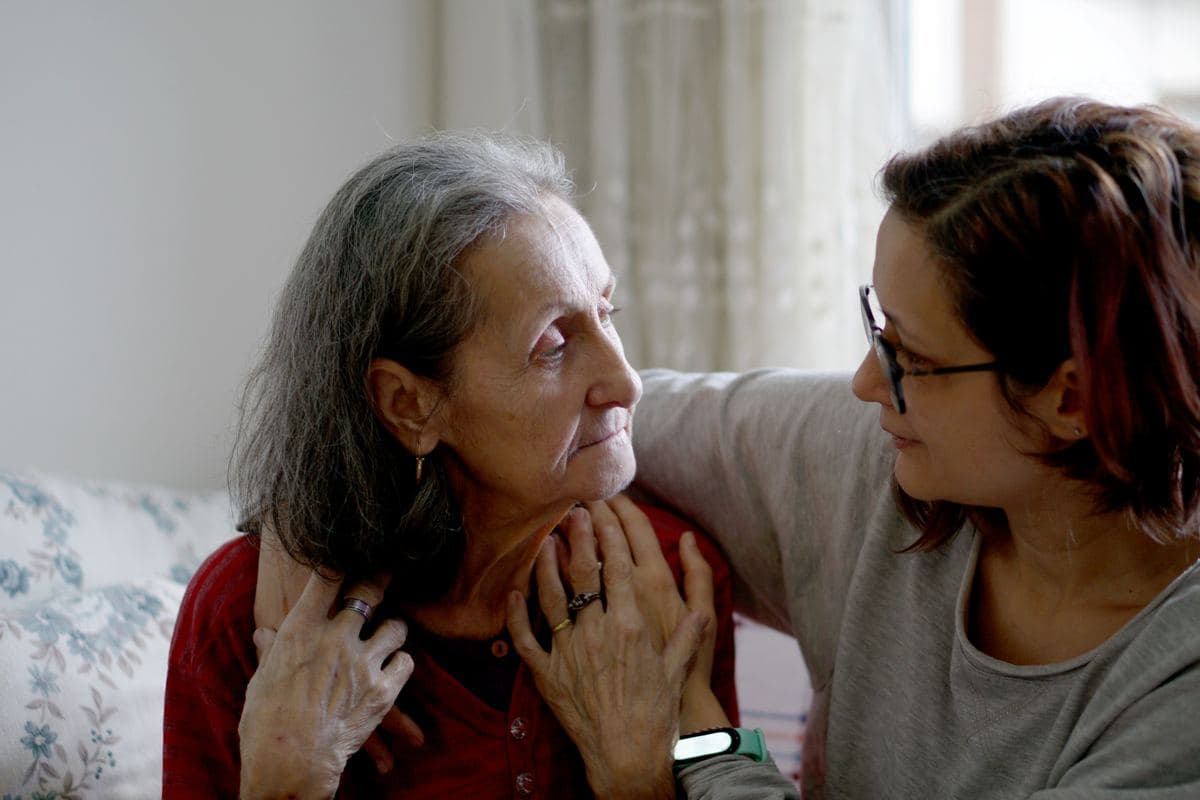
As populations age, increasing numbers of
adults aged 80 years and older depend on family members for practical,
emotional and personal support. Although caregiver “burden” is well recognised,
this concept does not fully describe how caregiving reorganises everyday life,
competes with employment and leisure, and affects caregivers’ ability to look
after themselves.
Blin and colleagues explored these issues in
a study published in May 2026 using two complementary perspectives: the Stress
Process Model, which describes how caregiving generates direct and indirect
stressors, and Occupational Balance, meaning the perceived balance and
satisfaction across everyday activities such as work, self-care, family
responsibilities and leisure. The study focused specifically on family
caregivers of adults aged ≥80 years and examined whether experiences differed
between working and retired caregivers.
How the study was conducted
This exploratory qualitative study was
carried out in the Provence-Alpes-Côte d’Azur region of France between December
2020 and June 2022 as part of the SCOPE project. The SCOPE project is a research
program designed to identify the needs of FCGs of older adults and to develop
tailored support strategies. Family caregivers were eligible if they provided
regular unpaid emotional, organisational, domestic, financial or personal
support to an adult aged at least 80 years.
Seventeen semi-structured interviews were
included in the final analysis. Interviews explored caregiving
responsibilities, effects on physical, psychological, social and professional
life, and caregivers’ perceived support needs.
Who were the caregivers?
Caregivers had a mean age of 63 years
(range 40–87), and 13 of 17 were women. Eleven were adult children and four
were spouses. Ten participants were retired, six were employed and one was
unemployed. The people receiving care had a mean age of 86.7 years (range
80–99).
Caregiving as a largely invisible role
A striking finding was that many
participants did not identify themselves as “caregivers”. Twelve of 17
described what they did mainly as ordinary family responsibilities, including
shopping, housework and administrative support. Retired participants often
framed caregiving as part of normal family life, whereas working caregivers
were more likely to describe it as a second job.
This lack of caregiver identity may have
practical consequences: people who do not see themselves as caregivers may be
less likely to recognise their own support needs or seek formal assistance.
Psychological strain and concern about
the future
Caregiving produced both positive and
negative experiences. Some participants reported closer relationships with the
person they supported, but many described substantial emotional and practical
strain.
Psychological exhaustion was reported by 14
of 17 caregivers, while 13 of 17 expressed strong concern about the future of
the older person. Working caregivers also described changing schedules, taking
leave, reducing employment or, in some cases, stopping work entirely. These
findings illustrate the combination of “primary” stressors arising directly
from caregiving and “secondary” stressors such as work–care conflict, financial
pressure and social isolation.
When caregiving crowds out everyday life
Care responsibilities frequently dominated
participants’ routines. Shopping, housework, meal preparation and
administrative tasks often displaced self-care and leisure. This pattern
reflects occupational imbalance: caregiving did not simply increase workload
but changed the overall distribution of meaningful activities.
The disruption appeared particularly marked
among employed caregivers. They described greater time scarcity and more
frequent abandonment of leisure and social activities. Retired caregivers more
often described adapting their routines rather than giving activities up
completely.
Support needs differ across life stages
Caregivers identified financial,
organisational, informational and care-coordination needs. Nine of 17
specifically highlighted the need to adapt or secure the older adult’s living
environment. Working caregivers tended to emphasise financial strain, respite
and practical organisational support, whereas retired caregivers more often
sought information, advice and help navigating services.
Importantly, most participants said their
own needs had never been formally assessed by a professional. Better
communication between healthcare and social-care providers, psychological
support, simplified administration and a clearly identified care coordinator
were repeatedly viewed as potential improvements.
What healthcare professionals can take
from the study
The findings suggest that supporting family
caregivers requires more than screening for “burden.” Clinicians should
consider how caregiving is affecting work, sleep, self-care, leisure, social
participation and the caregiver’s ability to maintain meaningful activities.
The authors propose systematic assessment
of caregiver needs, support adapted to employment and life stage, and stronger
coordination between health and social services. A designated care manager may
be particularly valuable where caregivers are effectively carrying the
responsibility for navigating fragmented systems themselves.
Overall, caregiving for adults aged 80 and
over should be understood not only as a source of stress, but as a major
reorganisation of daily life. Recognising and supporting the caregiver may
therefore be important both for caregiver well-being and for sustaining the
autonomy and quality of life of the older person receiving care.
Sign in to read the rest
Reserved for healthcare professionals, free registration.
Scientific reference
Blin, A., Bonin-Guillaume, S., Arlotto, S., & Gentile, S. (2026). Family Caregivers of Adults Aged 80 and over: Caregiving as a Stress Process and a Disruption of Occupational Balance. Healthcare, 14(10), 1305.
View the source