2026-05-06
Cancer: AI-measured “facial aging” emerges as a new prognostic biomarker
Oncology
In oncology, predicting disease progression and treatment response remains a major challenge. While tumor biomarkers, imaging, and clinical parameters already guide therapeutic decisions, they do not always capture a patient’s overall biological state. Yet biological aging, which reflects physiological frailty, strongly influences treatment tolerance and survival.
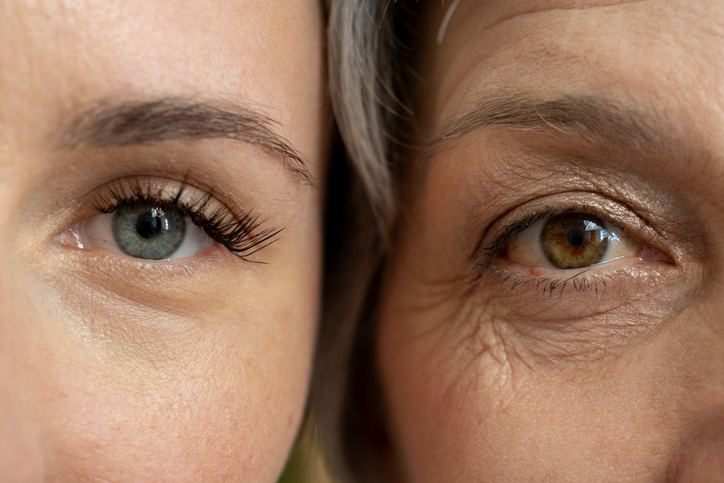
With this in mind, a team from Mass General Brigham is exploring a novel approach: using the face as a health indicator. In a study published on April 28 in Nature Communications, researchers show that the “rate of facial aging” measured by artificial intelligence could serve as a non-invasive prognostic biomarker in cancer.
FaceAge: estimating biological age from a face
The tool, called FaceAge, relies on deep learning algorithms capable of estimating an individual’s apparent biological age from a simple facial photograph.
A previous study had already shown that cancer patients appeared, according to FaceAge, on average five years older than their chronological age. The higher the estimated facial age, the poorer the prognosis after treatment.
In this new work, the objective was no longer just to measure a “snapshot” facial age, but to assess its dynamics over time.
Turning a series of photos into a prognostic tool
The researchers sought to determine whether changes in facial age over time could provide additional clinical insight into the health status and survival of cancer patients.
“Calculating the rate of facial aging from multiple facial photographs taken regularly allows near real-time monitoring of an individual’s health,” explains Dr. Raymond Mak, co-senior author and corresponding author, a radiation oncologist at the Mass General Brigham Cancer Institute, in a press release.
“Our study suggests that tracking facial age over time could refine personalized treatment planning, improve patient counseling, and help guide the frequency and intensity of oncology follow-up.”
The study included 2,279 patients with various cancers treated with radiotherapy at Brigham and Women’s Hospital between 2012 and 2023.
All patients had received at least two cycles of radiotherapy and had at least two facial photographs, taken as part of standard clinical protocol at each treatment cycle. The researchers calculated two parameters:
- The Facial Aging Rate (FAR), obtained by dividing the change in estimated facial age between two images by the time interval;
- The Facial Age Difference (FAD), defined as the difference between estimated facial age and chronological age at a given time point.
FAR thus reflects the speed of apparent biological aging, while FAD provides a static measure of “over-aging” or apparent “rejuvenation.”
Accelerated facial aging linked to poorer survival
The results showed that patients’ median facial aging was approximately 40% faster than their chronological aging.
A high FAR—indicating accelerated aging—was significantly associated with reduced survival. This association was particularly strong when the interval between the two photographs reached or exceeded two years.
Patients with both a high FAD and a high FAR also had significantly lower survival.
However, FAR proved more robust than FAD in predicting long-term survival, suggesting that a dynamic measure is more informative than a single time-point assessment.
The authors therefore propose that combining FAR with baseline FAD could provide a more refined view of changes in a patient’s overall condition.
Toward a non-invasive, low-cost biomarker ?
For Professor Hugo Aerts, co-author of the study and director of the Artificial Intelligence in Medicine (AIM) program, this approach opens broader perspectives. “Tracking facial age over time using simple photographs offers a non-invasive and cost-effective biomarker that could inform individuals about their health,” he notes. “We hope that further research will allow us to determine how facial age can provide prognostic information for patients with other chronic diseases and even for healthy individuals,” he adds.
These findings reinforce data from another recent study published in the Journal of the National Cancer Institute, conducted in more than 24,500 patients over the age of 60 treated with radiotherapy. In 65% of them, FaceAge-estimated age exceeded chronological age, with significantly lower survival when the gap reached 10 years or more.
Prospective trials are underway to validate FaceAge in other cancers and chronic conditions. The team has also launched a public web portal to collect additional data and further refine the algorithm.
Ultimately, this technology could become part of the predictive and personalized medicine toolkit: a simple photograph, repeated over time, could serve as a clinical indicator of frailty, complementing biological and imaging biomarkers. A promising prospect—provided its robustness is confirmed across more diverse populations and clinical settings.
Read next: Vaccine hesitancy: what if listening made all the difference?
About the Author – Elodie Vaz
Health journalist, CFPJ graduate (2023).
Élodie explores the marks diseases leave on bodies and, more broadly, on human life. A registered nurse since 2010, she spent twelve years at patients’ bedsides before exchanging her stethoscope for a notebook. She now investigates the links between environment and health, convinced that the vitality of life cannot be reduced to that of humans
Source(s) :
Last press reviews
Does Nicotinamide Really Prevent Skin Cancer?

By Ana Espino | Published on July 01, 2026 | 4 min read<br><br><br>
Exercising in Extreme Heat: How Can Performance Be Preserved While Reducing Health Risks?
By Ana Espino | Published on June 29, 2026 | 4 min read<br><br><br>
Oropouche Virus: A New Threat to Monitor During Pregnancy?

By Ana Espino | Published on June 26, 2026 | 4 min read<br><br>