2026-04-17
Chagas: the parasite that outsmarts the immune system?
Infectiology
By Ana Espino | Published on April 17, 2026 | 4 min read
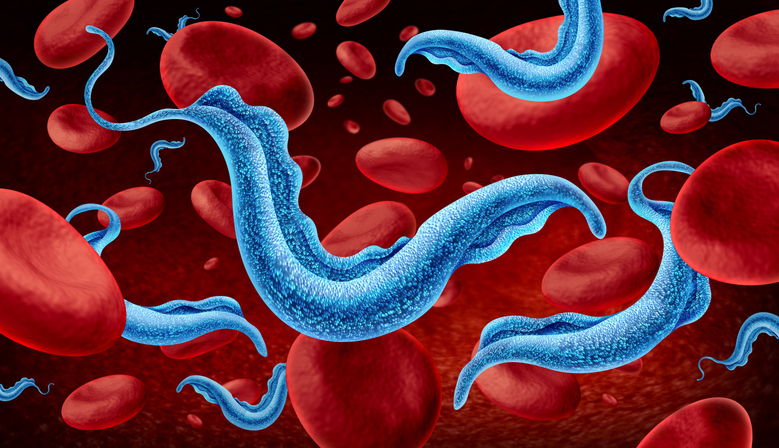
Chagas disease, or American trypanosomiasis, is a parasitic infection caused by Trypanosoma cruzi, mainly transmitted by blood-feeding insect vectors. It progresses in two phases: an acute phase that is often asymptomatic, followed by a chronic phase that, in some patients, can lead to severe and potentially fatal cardiac or digestive complications. Today, several million people remain infected, primarily in Latin America, although the disease is becoming increasingly global due to migration and environmental changes.
Despite decades of research, therapeutic options remain limited. Available treatments show variable efficacy, particularly in the chronic phase, and are associated with significant adverse effects. Moreover, no vaccine is currently available. This situation highlights major limitations in current management, particularly the inability to sustainably prevent infection or halt disease progression.
The main challenges lie in understanding the complex interactions between the parasite and the host immune system. T. cruzi is capable of deploying sophisticated immune evasion strategies, allowing it to persist long-term within the host.
In this context, this review, recently published by Oxford University Press, was conducted to analyze host immune responses, parasite evasion mechanisms, and recent advances in vaccine development, in order to identify avenues for better disease control.
This study is based on an in-depth analysis of existing data regarding:
• innate and adaptive immune responses to T. cruzi,
• parasite evasion mechanisms,
• the different vaccine approaches under development.
The data show that the body mounts a robust immune response to infection. Innate immunity represents the first line of defense, relying on recognition of the parasite via specific receptors (TLRs), triggering an inflammatory cascade and activation of cells such as macrophages and NK cells. At the same time, adaptive immunity mobilizes T lymphocytes (Th1, Th17, CD8+) and B lymphocytes, enabling a coordinated cellular and humoral response against the parasite.
However, despite this response, complete elimination of the parasite is rarely achieved. T. cruzi employs particularly effective evasion strategies. It disrupts immune signaling pathways, inhibits complement activation, and promotes a tolerant immunological environment. Notably, it can induce anti-inflammatory responses (Th2, regulatory cells) that reduce the effectiveness of host defenses and favor chronic persistence.
In the face of these obstacles, vaccine development represents a major avenue. Several innovative approaches are currently being explored:
• attenuated vaccines using CRISPR-Cas9, capable of inducing strong and durable immune responses,
• DNA vaccines targeting key antigens such as cruzipain,
• recombinant protein vaccines, some already in early clinical phases,
• mRNA vaccines, inspired by recent technologies, showing promising immune responses in preclinical models.
Overall, these strategies demonstrate the ability to reduce parasite burden and induce protective immune responses, but most remain at the preclinical stage.
Chagas disease remains a major parasitic infection, characterized by chronic progression and severe complications. Key challenges include the parasite’s ability to evade the immune system, persistence of infection, and the lack of effective preventive strategies such as vaccination.
This review aimed to better understand the interactions between T. cruzi and the immune system, and to assess progress in vaccine development.
The results show that, despite an initially effective immune response, the parasite succeeds in establishing chronic infection through complex evasion mechanisms.
However, recent advances in vaccine technologies offer promising perspectives for disease control. Future directions rely on a better understanding of immune mechanisms and on the development of vaccines combining multiple approaches. An integrated strategy, combining scientific innovation and public health efforts, will be essential to control—or even eliminate—this neglected tropical disease.
Read next: When immunity suppresses appetite: decoding a gut–brain dialogue
About the author – Ana Espino
PhD in Immunology, specialized in Virology
As a scientific writer, Ana is passionate about bridging the gap between research and real-world impact. With expertise in immunology, virology, oncology, and clinical studies, she makes complex science clear and accessible. Her mission: to accelerate knowledge sharing and empower evidence-based decisions through impactful communication.
Chagas disease, or American trypanosomiasis, is a parasitic infection caused by Trypanosoma cruzi, mainly transmitted by blood-feeding insect vectors. It progresses in two phases: an acute phase that is often asymptomatic, followed by a chronic phase that, in some patients, can lead to severe and potentially fatal cardiac or digestive complications. Today, several million people remain infected, primarily in Latin America, although the disease is becoming increasingly global due to migration and environmental changes.
Despite decades of research, therapeutic options remain limited. Available treatments show variable efficacy, particularly in the chronic phase, and are associated with significant adverse effects. Moreover, no vaccine is currently available. This situation highlights major limitations in current management, particularly the inability to sustainably prevent infection or halt disease progression.
The main challenges lie in understanding the complex interactions between the parasite and the host immune system. T. cruzi is capable of deploying sophisticated immune evasion strategies, allowing it to persist long-term within the host.
In this context, this review, recently published by Oxford University Press, was conducted to analyze host immune responses, parasite evasion mechanisms, and recent advances in vaccine development, in order to identify avenues for better disease control.
How does the parasite evade our defenses ?
This study is based on an in-depth analysis of existing data regarding:
• innate and adaptive immune responses to T. cruzi,
• parasite evasion mechanisms,
• the different vaccine approaches under development.
The data show that the body mounts a robust immune response to infection. Innate immunity represents the first line of defense, relying on recognition of the parasite via specific receptors (TLRs), triggering an inflammatory cascade and activation of cells such as macrophages and NK cells. At the same time, adaptive immunity mobilizes T lymphocytes (Th1, Th17, CD8+) and B lymphocytes, enabling a coordinated cellular and humoral response against the parasite.
However, despite this response, complete elimination of the parasite is rarely achieved. T. cruzi employs particularly effective evasion strategies. It disrupts immune signaling pathways, inhibits complement activation, and promotes a tolerant immunological environment. Notably, it can induce anti-inflammatory responses (Th2, regulatory cells) that reduce the effectiveness of host defenses and favor chronic persistence.
In the face of these obstacles, vaccine development represents a major avenue. Several innovative approaches are currently being explored:
• attenuated vaccines using CRISPR-Cas9, capable of inducing strong and durable immune responses,
• DNA vaccines targeting key antigens such as cruzipain,
• recombinant protein vaccines, some already in early clinical phases,
• mRNA vaccines, inspired by recent technologies, showing promising immune responses in preclinical models.
Overall, these strategies demonstrate the ability to reduce parasite burden and induce protective immune responses, but most remain at the preclinical stage.
Vaccine hope in progress
Chagas disease remains a major parasitic infection, characterized by chronic progression and severe complications. Key challenges include the parasite’s ability to evade the immune system, persistence of infection, and the lack of effective preventive strategies such as vaccination.
This review aimed to better understand the interactions between T. cruzi and the immune system, and to assess progress in vaccine development.
The results show that, despite an initially effective immune response, the parasite succeeds in establishing chronic infection through complex evasion mechanisms.
However, recent advances in vaccine technologies offer promising perspectives for disease control. Future directions rely on a better understanding of immune mechanisms and on the development of vaccines combining multiple approaches. An integrated strategy, combining scientific innovation and public health efforts, will be essential to control—or even eliminate—this neglected tropical disease.
Read next: When immunity suppresses appetite: decoding a gut–brain dialogue
About the author – Ana Espino
PhD in Immunology, specialized in Virology
As a scientific writer, Ana is passionate about bridging the gap between research and real-world impact. With expertise in immunology, virology, oncology, and clinical studies, she makes complex science clear and accessible. Her mission: to accelerate knowledge sharing and empower evidence-based decisions through impactful communication.
Last press reviews
Does Nicotinamide Really Prevent Skin Cancer?

By Ana Espino | Published on July 01, 2026 | 4 min read<br><br><br>
Exercising in Extreme Heat: How Can Performance Be Preserved While Reducing Health Risks?

By Ana Espino | Published on June 29, 2026 | 4 min read<br><br><br>
Oropouche Virus: A New Threat to Monitor During Pregnancy?

By Ana Espino | Published on June 26, 2026 | 4 min read<br><br>