2026-02-24
Type 1 Diabetes: “Cyborg” transplants to restore the pancreas
Endocrinology and Metabolism
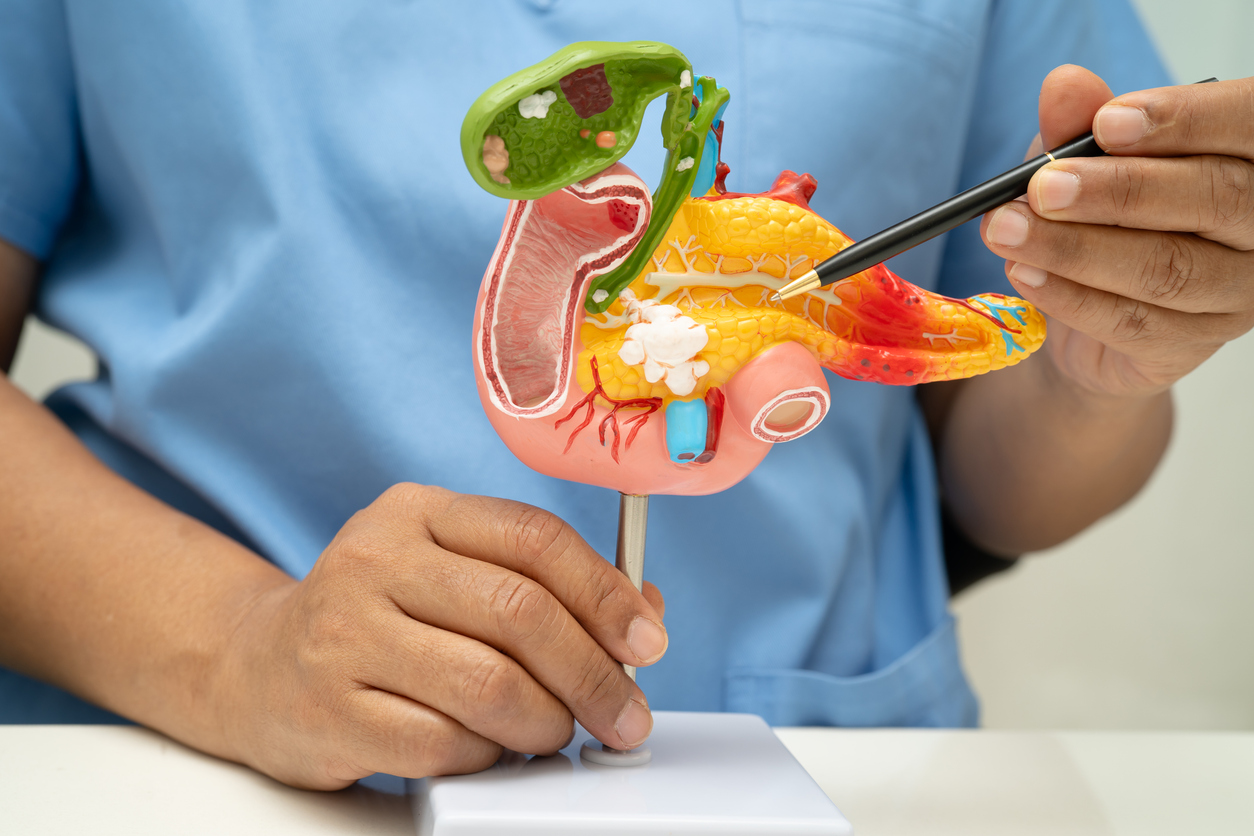
Type 1 diabetes results from the autoimmune destruction of the islets of Langerhans, clusters of cells responsible for insulin secretion. Deprived of this key hormone in glucose homeostasis, the body loses control of blood sugar levels. In the United States, the Centers for Disease Control and Prevention (CDC) estimated that nearly two million people were living with the condition in 2021. In severe cases, whole-pancreas or islet transplantation remains an option, but the shortage of donors and the need for lifelong immunosuppression limit its applicability.
In response to these constraints, the in vitro production of pancreatic tissue from stem cells represents an appealing alternative. Yet a major obstacle remains: beta cells derived in the laboratory are often immature and secrete insulin irregularly. A study published on February 19 in Science by researchers from the Perelman School of Medicine and the Harvard School of Engineering and Applied Sciences proposes an original approach: integrating an ultrathin electronic mesh directly into the growing tissue to guide its maturation.
Orchestrating functional maturation
The team led by Professors Juan Alvarez and Jia Liu pursued a dual objective: to understand the electrical determinants of islet cell maturation and to harness these signals to produce fully functional tissue. “The terms ‘bionic,’ ‘cybernetic,’ ‘cyborg’ all apply to the device we created,” said Professor Alvarez. “What we are doing is comparable to deep stimulation of the pancreas. Just as pacemakers help the heart maintain its rhythm, controlled electrical impulses can help pancreatic cells develop and function properly,” he explained in a press release.
An augmented pancreas
Professor Alvarez’s laboratory, which specializes in three-dimensional pancreatic organoids, partnered with Professor Jia Liu’s group, experts in biomimetic electronic implants. Together, they inserted a stretchable mesh, thinner than a human hair, between layers of cells intended to form islets. This conductive network makes it possible to record the electrical activity of individual cells over a two-month period.
The researchers then imposed an artificial 24-hour circadian rhythm on the tissue’s electrical activity. This protocol builds on previous work showing that exposing immature cells to a biological rhythm promotes their specialization. “I like to say that this is when the cells earn their PhD,” the scientist explained. “It is when they stop being undecided students and fully commit to their path.”
Synchronization and secretory competence
Introducing a circadian electrical rhythm induced marked maturation of the islet cells. After four days of stimulation, the cells continued their activity autonomously. They secreted insulin and other hormones at the appropriate times, with dynamics more closely resembling those observed in vivo.
Recordings also revealed a phenomenon of intercellular synchronization. The imposed cycles did not merely alter individual electrical behavior but promoted collective coordination, “like a well-coordinated team.” This synchrony could be critical for restoring a physiological glycemic response after transplantation.
Toward intelligent implants
Two strategies are emerging. The first would consist of “activating” the cells in vitro using the device, then implanting them without the mesh, relying on their acquired autonomy. The second would involve maintaining the electronic network in situ to continuously monitor and stimulate the grafted tissue, preventing potential functional regression related to stress or disease.
Ultimately, artificial intelligence–driven control could adjust electrical stimulation in real time. “In the future, we could have a system that operates without human intervention,” anticipates Professor Alvarez.
By integrating electronics at the core of living tissue, this approach redefines the boundaries of cell therapy. Although preclinical and clinical validation remains necessary, these “cyborg” transplants outline a path toward more readily available pancreatic substitutes, potentially less prone to rejection and endowed with enhanced self-regulatory capacity. Beyond diabetes, this convergence of bioengineering and regenerative medicine may pave the way for hybrid organs in which silicon durably supports cellular physiology.
Read next: Liver, sugar, and pills: who's in control?
About the Author – Elodie Vaz
Health journalist, CFPJ graduate (2023).
Élodie explores the marks diseases leave on bodies and, more broadly, on human life. A registered nurse since 2010, she spent twelve years at patients’ bedsides before exchanging her stethoscope for a notebook. She now investigates the links between environment and health, convinced that the vitality of life cannot be reduced to that of humans alone.
Source(s) :
Could “cyborg” transplants replace pancreatic tissue damaged by diabetes?. University of Pennsylvania School of Medicine; 2026 Feb 19. ;
Li Q, Liu R, Lin Z, Zhang X, Wang W, Silva IG, Liu M, Gao Z, Pollock SD, Alvarez-Dominguez JR, Liu J. Implanted flexible electronics reveal principles of human islet cell electrical maturation. Science. 2026; (Feb 19):eab3295. ;
Last press reviews
Does Nicotinamide Really Prevent Skin Cancer?

By Ana Espino | Published on July 01, 2026 | 4 min read<br><br><br>
Exercising in Extreme Heat: How Can Performance Be Preserved While Reducing Health Risks?

By Ana Espino | Published on June 29, 2026 | 4 min read<br><br><br>
Oropouche Virus: A New Threat to Monitor During Pregnancy?
By Ana Espino | Published on June 26, 2026 | 4 min read<br><br>