This content is in French.
Type 1 Diabetes: “Cyborg” transplants to restore the pancreas
24 février 2026
By Elodie Vaz | Published on February 24, 2026 | 3 min readType 1 diabetes results from the autoimmune destruction of the islets of Langerhans, clusters of cells responsible for insulin secretion. Deprived of this key hormone in glucose homeostasis, the body loses control of blood sugar levels. In the United States, the Centers for Disease Control and Prevention (CDC) estimated that nearly two mil
By Elodie Vaz | Published on February 24, 2026 | 3 min read
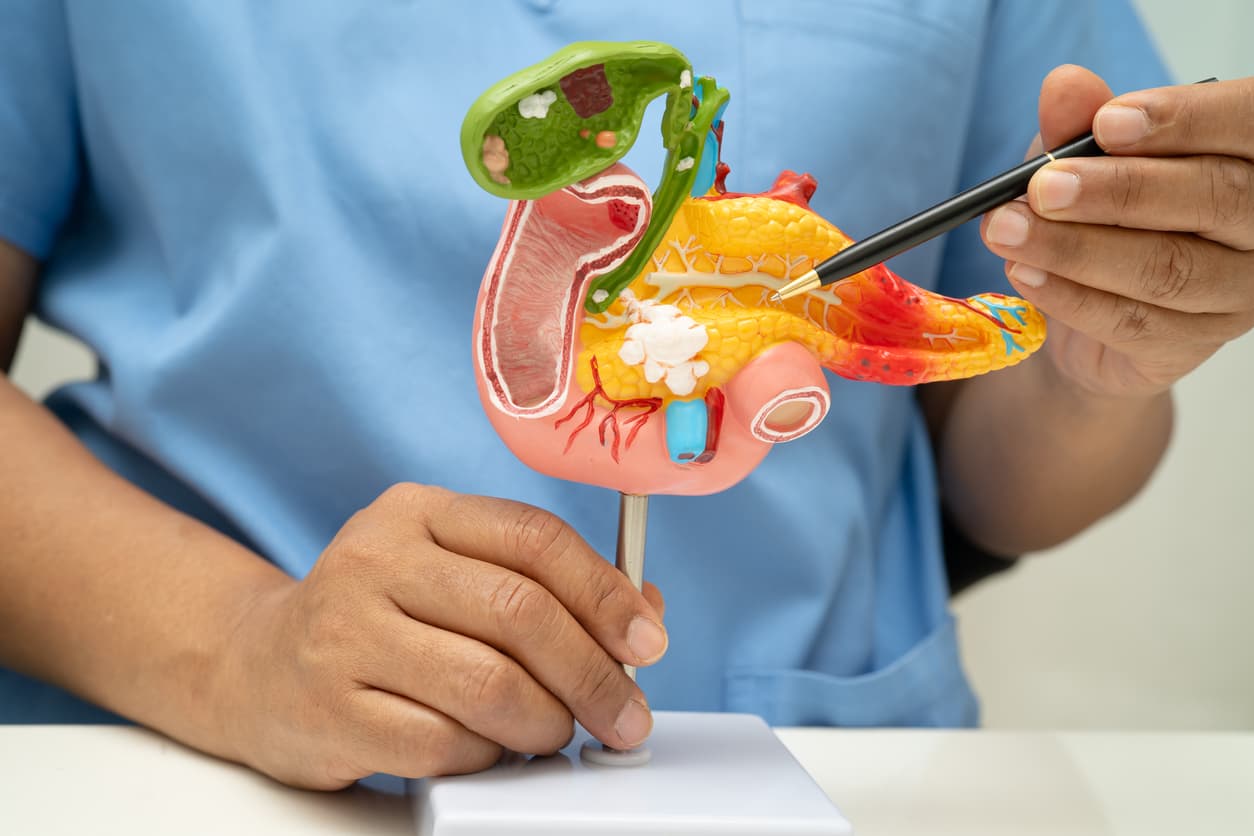
Type 1 diabetes results from the autoimmune destruction of the islets of Langerhans, clusters of cells responsible for insulin secretion. Deprived of this key hormone in glucose homeostasis, the body loses control of blood sugar levels. In the United States, the Centers for Disease Control and Prevention (CDC) estimated that nearly two million people were living with the condition in 2021. In severe cases, whole-pancreas or islet transplantation remains an option, but the shortage of donors and the need for lifelong immunosuppression limit its applicability.
In response to these constraints, the in vitro production of pancreatic tissue from stem cells represents an appealing alternative. Yet a major obstacle remains: beta cells derived in the laboratory are often immature and secrete insulin irregularly. A study published on February 19 in Science by researchers from the Perelman School of Medicine and the Harvard School of Engineering and Applied Sciences proposes an original approach: integrating an ultrathin electronic mesh directly into the growing tissue to guide its maturation.
Type 1 diabetes results from the autoimmune destruction of the islets of Langerhans, clusters of cells responsible for insulin secretion. Deprived of this key hormone in glucose homeostasis, the body loses control of blood sugar levels. In the United States, the Centers for Disease Control and Prevention (CDC) estimated that nearly two million people were living with the condition in 2021. In severe cases, whole-pancreas or islet transplantation remains an option, but the shortage of donors and the need for lifelong immunosuppression limit its applicability.
In response to these constraints, the in vitro production of pancreatic tissue from stem cells represents an appealing alternative. Yet a major obstacle remains: beta cells derived in the laboratory are often immature and secrete insulin irregularly. A study published on February 19 in Science by researchers from the Perelman School of Medicine and the Harvard School of Engineering and Applied Sciences proposes an original approach: integrating an ultrathin electronic mesh directly into the growing tissue to guide its maturation.
Sign in to read the rest
Reserved for healthcare professionals, free registration.
Scientific reference
Could “cyborg” transplants replace pancreatic tissue damaged by diabetes?. University of Pennsylvania School of Medicine; 2026 Feb 19.
View the source