By Ana Espino | Published on July 31, 2025 | 3 min read
#Hepatitis #Immunity #Autoimmunity #HepaticFibrosis
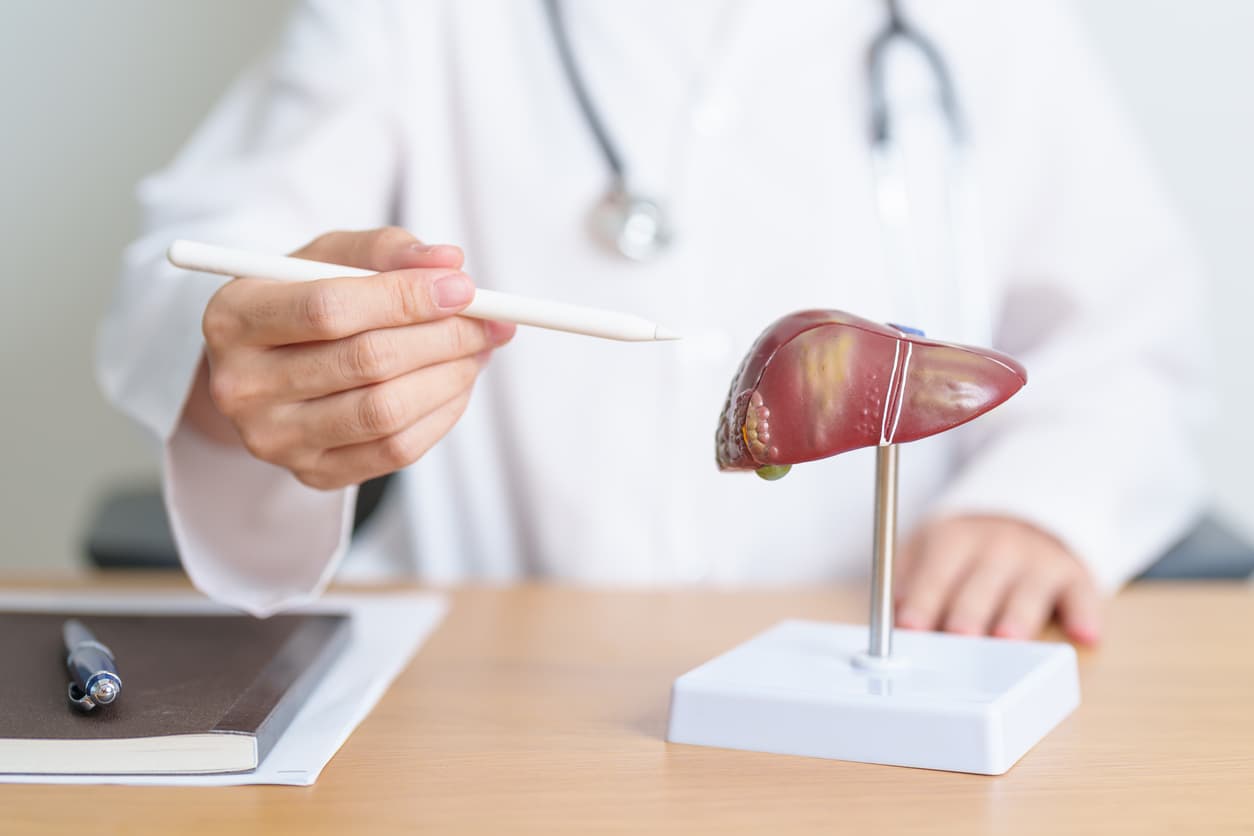
Hepatic fibrosis is a common,
progressive, and often silent complication of
autoimmune liver diseases (AILD),
including primary biliary cholangitis (PBC), autoimmune hepatitis (AIH), and
primary sclerosing cholangitis (PSC). These conditions are characterized by
chronic inflammation that causes
liver damage, which progresses to fibrosis and
eventually cirrhosis in the absence of effective treatment.
Diagnosis and
monitoring of fibrosis
still often rely on
liver biopsy, despite its limitations: invasiveness,
inter-observer variability, and lack of reproducibility over time. Non-invasive
assessment of fibrosis has therefore become a key challenge for safer, more
precise, and better-targeted management.
The main challenge is to
predict
fibrosis progression without resorting to invasive methods, while identifying
high-risk patients requiring intensified therapy. In this context, this study
was initiated to provide an updated synthesis on fibrosis mechanisms in AILD,
the non-invasive tools available for its evaluation, and current and emerging
therapeutic options.
Can fibrosis really be assessed
without a biopsy?
For this work, recent clinical and
experimental studies on
hepatic fibrosis in
autoimmune liver diseases (PBC,
AIH, PSC) were reviewed. The analysis focused on three main areas:
the
pathogenic mechanisms of
fibrosis,
non-invasive evaluation methods including serologic scores,
elastography, and emerging biomarkers, and the
impact of treatments on fibrosis
progression. Comparative data allowed the assessment of
diagnostic performance
and
therapeutic responses based on fibrosis stage.
From a
pathophysiological
perspective, fibrosis results from
chronic activation of hepatic stellate cells
and portal fibroblasts under persistent stimulation by pro-inflammatory
cytokines. Molecular patterns differ by disease: in PBC, fibrosis is often periportal;
in PSC, it is more concentric and peribiliary; in AIH, it is mainly lobular.
Non-invasive evaluation currently
relies on several complementary approaches. Serologic scores (APRI, FIB-4, ELF)
demonstrate
moderate utility, though their performance remains limited in AILD.
Elastography (FibroScan, ARFI, MRE) has emerged as a preferred tool,
particularly for PSC.
Emerging biomarkers such as microRNAs, fecal
calprotectin, and transcriptomic signatures may further refine risk
stratification.
Therapeutically,
ursodeoxycholic
acid remains the mainstay for PBC and PSC, though it is insufficient for about
one-third of patients.
Second-line agents (obeticholic acid, fibrates,
budesonide, immunosuppressants) are either in development or pending approval.
The current goal is to combine autoimmune inflammation control with direct
modulation of fibrogenesis.
Read next: HBV: Immunity asleep or awakened?
From needle to biomarker: a
revolution in progress?
Autoimmune liver diseases carry a
high risk of silent, progressive fibrosis. The current dual challenge is to
detect fibrosis progression early and to tailor therapeutic strategies without
systematic reliance on biopsy.
This review highlights major
advances in understanding
fibrogenesis mechanisms and
the emergence of reliable
non-invasive tools. While elastography is already a relevant alternative, the
future lies in
integrative approaches combining imaging, serologic biomarkers,
and molecular signatures.
The future management of fibrosis in
AILD will rely on the
development of precision medicine based on validated
non-invasive tools and dynamic markers. These approaches will enable
closer
monitoring of fibrosis evolution and
earlier treatment adaptation, taking into
account the diversity of clinical profiles and individual responses.
Read next: HBV: Immunity asleep or awakened?
About the author – Ana EspinoPhD in Immunology, specialized in Virology
As a scientific writer, Ana is passionate about bridging the gap between research and real-world impact. With expertise in immunology, virology, oncology, and clinical studies, she makes complex science clear and accessible. Her mission: to accelerate knowledge sharing and empower evidence-based decisions through impactful communication.