By Ana Espino | Published on August 01, 2025 | 2 min read
#Tumor #OncolyticVirus #Oncology
#NewTherapy
Intermediate to advanced-stage solid
tumors represent a major therapeutic challenge. Their
limited response to
conventional treatments—surgery, chemotherapy, radiotherapy—has created a
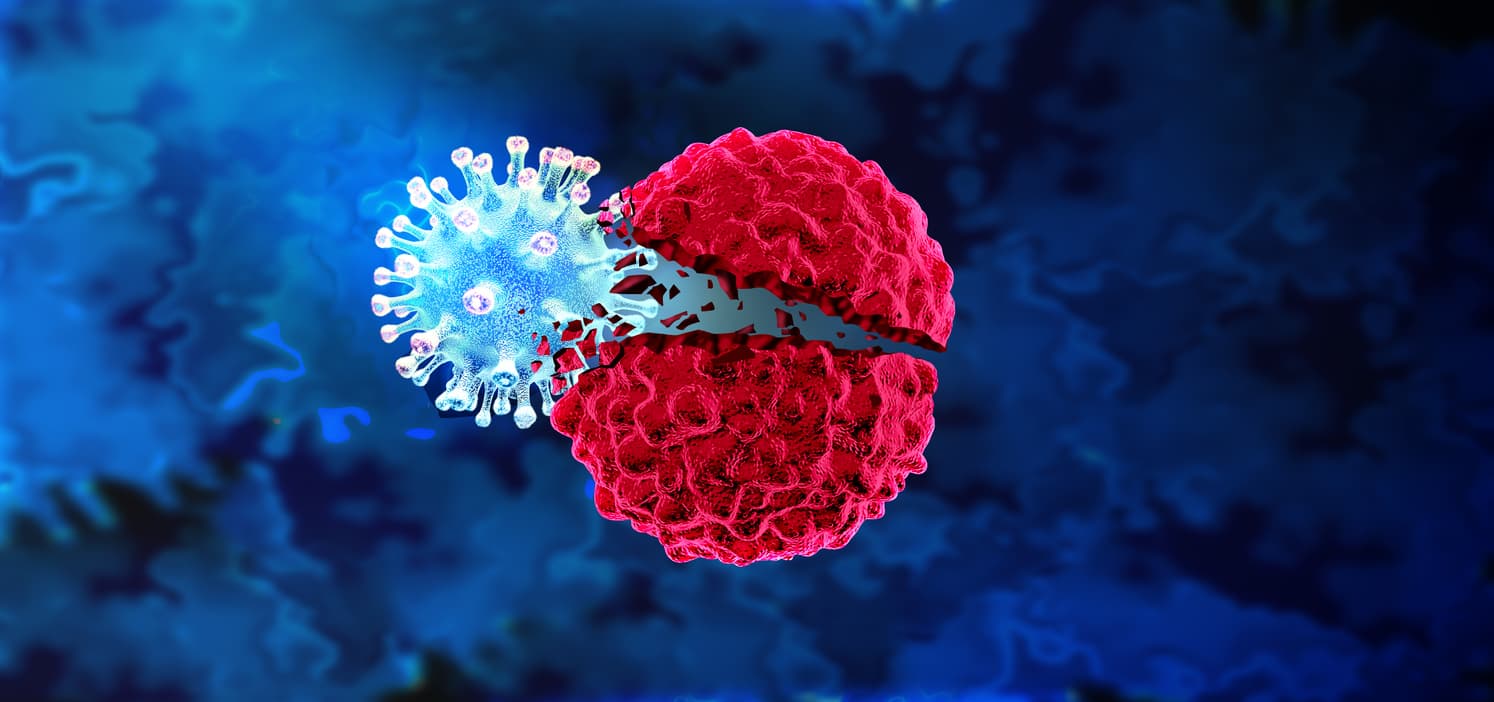
pressing need for innovative approaches. Among these, oncolytic viruses (OVs)
are emerging as a promising option. Capable of selectively infecting and destroying
tumor cells while stimulating an
antitumor immune response, these viruses are
being tested across numerous cancer types. However, their actual effectiveness
in humans remains to be clarified, particularly in terms of survival and
objective response. In this context, this study was initiated to systematically
and quantitatively evaluate the
clinical efficacy of oncolytic viruses in the
treatment of intermediate to advanced solid tumors, by analyzing the results of
available clinical trials.
Have viruses found the weak spot in
solid tumors?
Twenty-two clinical trials published between 2005 and 2023, involving 948
patients with various types of solid tumors (melanoma, liver, pancreatic, lung,
colorectal cancers, etc.), were included. Patients were treated with different
types of oncolytic viruses (HSV-1, adenovirus, vaccinia, reovirus), either
alone or in combination with other therapies (immunotherapy, chemotherapy).
The efficacy of these viruses was
assessed by measuring the following outcome variables: Objective Response Rate
(ORR), Disease Control Rate (DCR), Overall Survival at 1 year (OS), and Progression-Free
Survival (PFS).
The overall analysis reveals an ORR
of 22%, indicating that nearly a quarter of patients experienced a measurable
tumor reduction. The DCR reached 58%, including partial responses, complete
responses, and stable disease. The 1-year OS stood at 61%, while PFS was 42%.
Sub-analyses further showed that the
efficacy of oncolytic viruses is enhanced when
combined with immunotherapy,
particularly PD-1/PD-L1 checkpoint inhibitors. The tumor types most responsive
to this approach were
melanoma, liver cancer, and ovarian cancer. Adverse
events were generally
mild, with fever, injection site pain, and transient
fatigue being the most frequently reported.
A breakthrough in progress—but still
unstable
Advanced solid tumors are among the
most difficult to treat due to their resistance and heterogeneity. The
objective of this study was to assess the real-world clinical impact of
oncolytic viruses in such a complex setting.
The results indicate moderate but
clinically meaningful efficacy, with a good tumor control rate and positive
survival signals—particularly when combined with
immunotherapies like
checkpoint inhibitors. These findings confirm the
potential of OVs as an
innovative therapeutic option in advanced solid cancers.
However, the diversity of viruses
used, the heterogeneity of protocols, and the variability of clinical responses
currently limit the generalization of these findings. To consolidate these
promising data, well-designed phase III trials and better-defined combination
strategies are needed. The future of oncolytic viruses likely lies in
personalized
approaches, guided by predictive biomarkers and tailored to the immunological
profile of each tumor, in order to optimize clinical efficacy.
Read next: Reprogramming fat to starve the tumor?
About the author – Ana EspinoPhD in Immunology, specialized in Virology
As a scientific writer, Ana is passionate about bridging the gap between research and real-world impact. With expertise in immunology, virology, oncology, and clinical studies, she makes complex science clear and accessible. Her mission: to accelerate knowledge sharing and empower evidence-based decisions through impactful communication.