This content is in French.
Gut microbiota and colorectal cancer: the cancer’s invisible ally?
13 mars 2026
By Ana Espino | Published on March 13, 2026 | 3 min readColorectal cancer (CRC) is among the most common and most lethal cancers worldwide. While established risk factors—diet, obesity, smoking, and physical inactivity—are well recognized, they do not fully explain tumor initiation and progression. Scientific attention has therefore increasingly turned to the intestinal microbiota, a central actor
By Ana Espino | Published on March 13, 2026 | 3 min read
Colorectal cancer (CRC) is among the most common and most lethal cancers worldwide. While established risk factors—diet, obesity, smoking, and physical inactivity—are well recognized, they do not fully explain tumor initiation and progression. Scientific attention has therefore increasingly turned to the intestinal microbiota, a central actor in digestive and immune homeostasis.
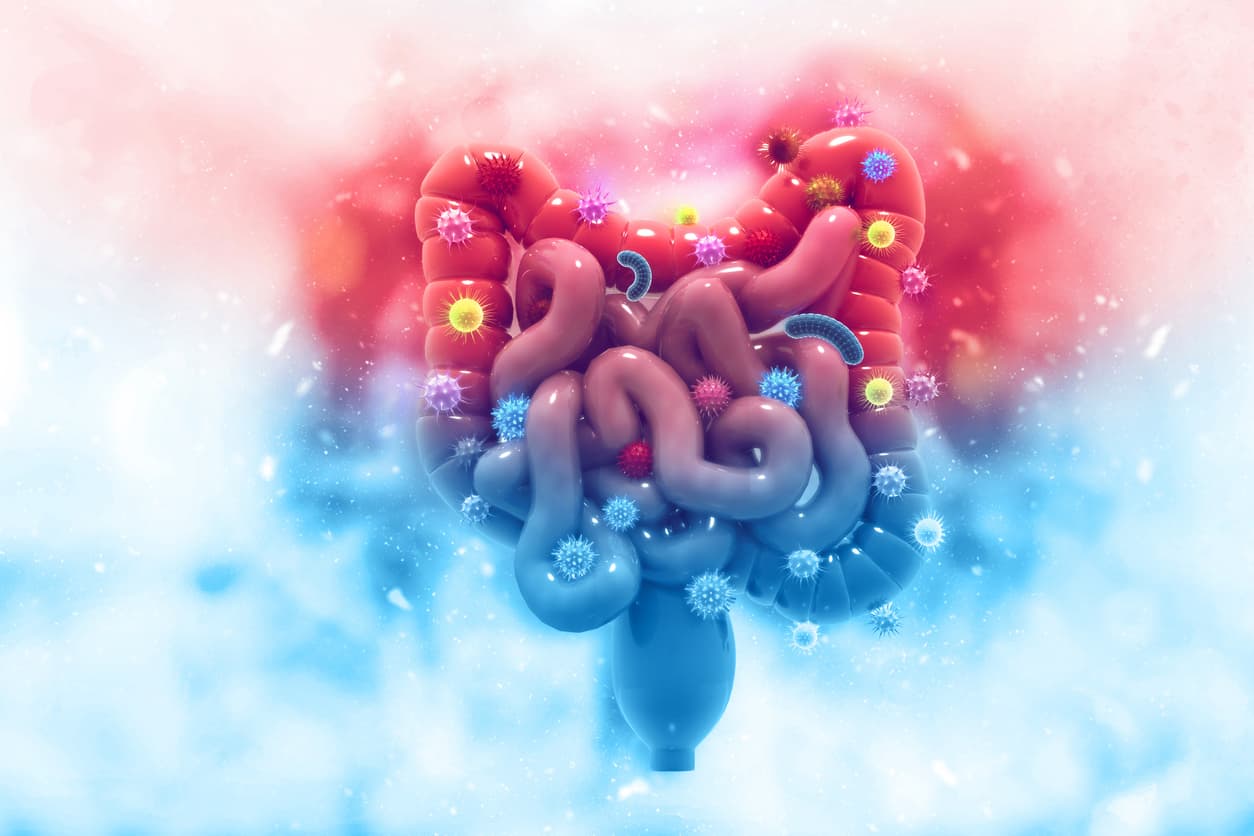
The gut microbiota modulates the intestinal barrier, local inflammation, and the production of bioactive metabolites. Dysbiosis, characterized by an alteration in microbial diversity and bacterial composition, may promote a pro-tumorigenic microenvironment. However, the precise nature of the interactions between the microbiota and colorectal epithelial cells remains complex and multifactorial.
This review, recently published in the International Journal of Molecular Sciences, analyzes the mechanisms by which the intestinal microbiota influences CRC initiation, progression, and therapeutic response, highlighting the bacterial species involved and their associated molecular pathways.
Colorectal cancer (CRC) is among the most common and most lethal cancers worldwide. While established risk factors—diet, obesity, smoking, and physical inactivity—are well recognized, they do not fully explain tumor initiation and progression. Scientific attention has therefore increasingly turned to the intestinal microbiota, a central actor in digestive and immune homeostasis.
The gut microbiota modulates the intestinal barrier, local inflammation, and the production of bioactive metabolites. Dysbiosis, characterized by an alteration in microbial diversity and bacterial composition, may promote a pro-tumorigenic microenvironment. However, the precise nature of the interactions between the microbiota and colorectal epithelial cells remains complex and multifactorial.
This review, recently published in the International Journal of Molecular Sciences, analyzes the mechanisms by which the intestinal microbiota influences CRC initiation, progression, and therapeutic response, highlighting the bacterial species involved and their associated molecular pathways.
Sign in to read the rest
Reserved for healthcare professionals, free registration.
Scientific reference
Ionescu VA, et al. Gut Microbiota and Colorectal Cancer: A Balance Between Risk and Protection. Int J Mol Sci. 2025 Apr 15;26(8):3733. doi: 10.3390/ijms26083733. PMID: 40332367; PMCID: PMC120283317
View on PubMed