2026-03-10
Algodystrophy: underestimated, under-recognized and undertreated conditions
General Medicine
By
Elodie Vaz | Published on March 10, 2026 | 3 min read
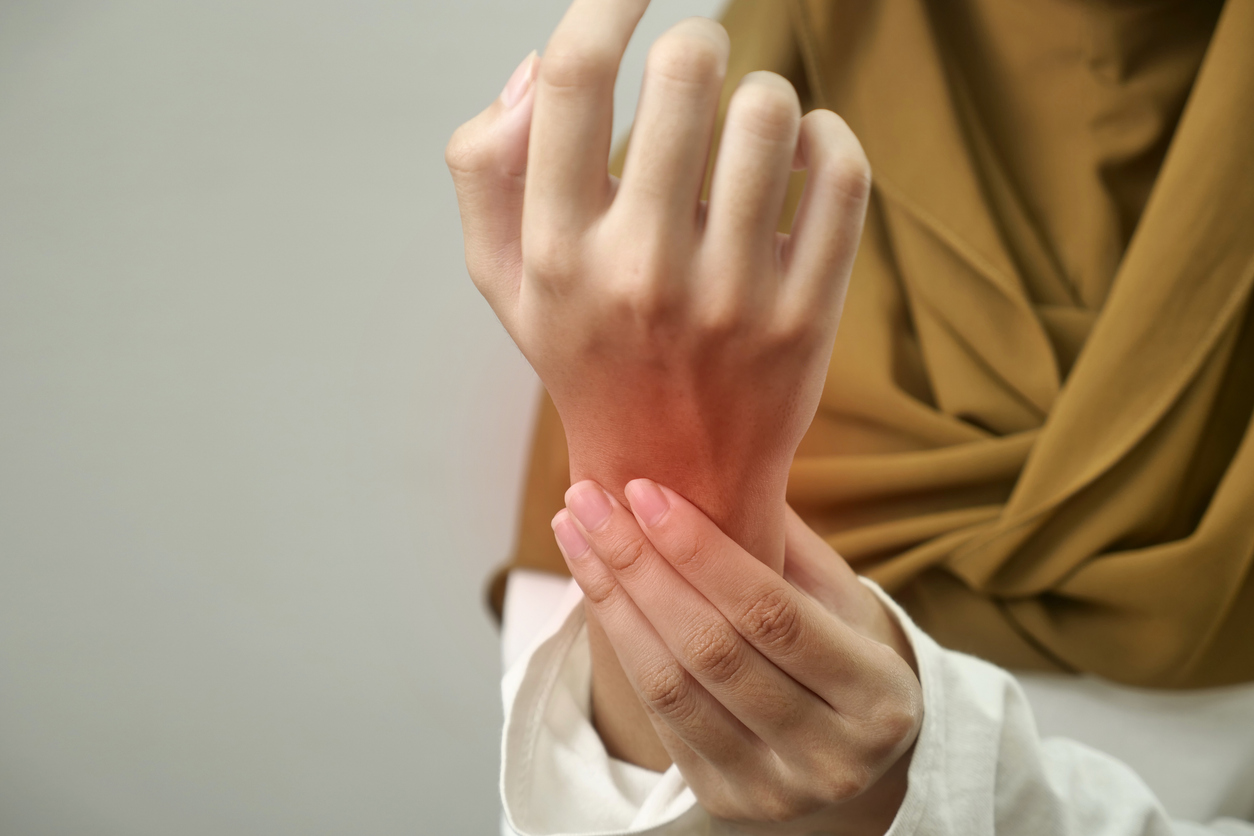
Long relegated to the status of a rare complication, complex regional pain syndrome (CRPS) remains a largely underestimated condition. Yet its consequences can be major. The disorder is characterized by persistent and disabling pain, most often affecting the limbs: wrist, shoulder, foot, or knee. It frequently occurs after trauma, a sprain, tendinitis, or a surgical procedure.
In France, nearly 50,000 people—women, men, and children—are believed to be affected. Despite this prevalence, the condition is still poorly recognized and sometimes inadequately managed. As Prof. Eric Viel, a pain medicine specialist, noted during a press conference organized on March 4 at the National Academy of Surgery: “CRPS encompasses a set of articular and peri-articular symptoms dominated by persistent pain with a regional distribution that does not correspond to either a dermatome or a specific nerve territory.”
In response to this situation, the National Academy of Surgery brought together several experts to review current knowledge on CRPS. The objective was to assess developments in diagnosis, advances in the pathophysiological understanding of the disease, and therapeutic strategies that could improve patient care.
The analyses presented rely on a multidisciplinary approach involving pain specialists, orthopedic surgeons, and experts in physical and rehabilitation medicine. Prof. Eric Viel emphasizes that algodystrophy is not a new condition: “Complex regional pain syndrome was described in detail by Ambroise Paré as early as the 15th century and later widely documented by Silas Weir Mitchell during the American Civil War.”
Today, diagnosis relies primarily on medical history and clinical examination, using the Budapest criteria. The incidence of the disease ranges from 0.19% to 1.2% after trauma or surgery, with prolonged immobilization of a limb being one of the main contributing factors.
Knowledge of the underlying pathophysiology has progressed considerably in recent years. Researchers have highlighted the association between neurogenic inflammation and dysfunction of the autonomic nervous system.
The release of neuropeptides—such as substance P or calcitonin gene-related peptide (CGRP)—leads to edema, redness, increased local temperature, and skin changes. At the same time, abnormal adrenergic receptor reactivity contributes to the vasomotor and sudomotor disturbances observed in patients.
Recent studies also suggest the presence of specific microbiome signatures, as well as circulating autoreactive IgM and IgG antibodies in some patients. The hypothesis of a permissive genetic background has also been proposed. From a surgical perspective, Dr. Rémy Coulomb highlights the complexity of management. “Complex regional pain syndrome is a rare but feared complication in orthopedic surgery.” High-risk situations include trauma requiring prolonged immobilization, planned surgery in patients with significant preoperative pain, and repeat surgical procedures.
From a therapeutic standpoint, management relies on a combined strategy aimed at three objectives: pain control, functional recovery, and improvement of quality of life. Certain drug classes have shown limited effectiveness—notably NSAIDs, paracetamol, and weak opioids. Other options may be considered depending on the case: corticosteroids in the presence of significant inflammation, gabapentin for neuropathic pain, or intravenous bisphosphonates.
Non-pharmacological approaches also play a central role. As emphasized by Prof. Arnaud Dupeyron, current strategies prioritize early and active rehabilitation. “The objective is to gradually restore function by encouraging movement, even in the presence of pain.” Mirror therapy, motor imagery, graded exposure to movement, and cognitive-behavioral therapies are now part of the therapeutic arsenal.
Algodystrophy illustrates the challenges posed by complex chronic pain conditions. However, recent advances—both in pathophysiology and therapeutics—are paving the way for more effective management based on a multidisciplinary and early approach.
In the coming years, the challenge will be to improve clinician awareness and integrate these new insights into structured decision-making algorithms, in order to reduce functional sequelae and restore patients’ quality of life. At a time when research is exploring new therapeutic avenues—such as botulinum toxin, transcranial magnetic stimulation, or implanted neurostimulation—CRPS highlights how the understanding of chronic pain remains a critical field of research in contemporary medicine.
About the Author – Elodie Vaz
Health journalist, CFPJ graduate (2023).
Élodie explores the marks diseases leave on bodies and, more broadly, on human life. A registered nurse since 2010, she spent twelve years at patients’ bedsides before exchanging her stethoscope for a notebook. She now investigates the links between environment and health, convinced that the vitality of life cannot be reduced to that of human.
Long relegated to the status of a rare complication, complex regional pain syndrome (CRPS) remains a largely underestimated condition. Yet its consequences can be major. The disorder is characterized by persistent and disabling pain, most often affecting the limbs: wrist, shoulder, foot, or knee. It frequently occurs after trauma, a sprain, tendinitis, or a surgical procedure.
In France, nearly 50,000 people—women, men, and children—are believed to be affected. Despite this prevalence, the condition is still poorly recognized and sometimes inadequately managed. As Prof. Eric Viel, a pain medicine specialist, noted during a press conference organized on March 4 at the National Academy of Surgery: “CRPS encompasses a set of articular and peri-articular symptoms dominated by persistent pain with a regional distribution that does not correspond to either a dermatome or a specific nerve territory.”
Better understanding for better management
In response to this situation, the National Academy of Surgery brought together several experts to review current knowledge on CRPS. The objective was to assess developments in diagnosis, advances in the pathophysiological understanding of the disease, and therapeutic strategies that could improve patient care.
Integrating clinical perspectives
The analyses presented rely on a multidisciplinary approach involving pain specialists, orthopedic surgeons, and experts in physical and rehabilitation medicine. Prof. Eric Viel emphasizes that algodystrophy is not a new condition: “Complex regional pain syndrome was described in detail by Ambroise Paré as early as the 15th century and later widely documented by Silas Weir Mitchell during the American Civil War.”
Today, diagnosis relies primarily on medical history and clinical examination, using the Budapest criteria. The incidence of the disease ranges from 0.19% to 1.2% after trauma or surgery, with prolonged immobilization of a limb being one of the main contributing factors.
A multifactorial condition still poorly understood
Knowledge of the underlying pathophysiology has progressed considerably in recent years. Researchers have highlighted the association between neurogenic inflammation and dysfunction of the autonomic nervous system.
The release of neuropeptides—such as substance P or calcitonin gene-related peptide (CGRP)—leads to edema, redness, increased local temperature, and skin changes. At the same time, abnormal adrenergic receptor reactivity contributes to the vasomotor and sudomotor disturbances observed in patients.
Recent studies also suggest the presence of specific microbiome signatures, as well as circulating autoreactive IgM and IgG antibodies in some patients. The hypothesis of a permissive genetic background has also been proposed. From a surgical perspective, Dr. Rémy Coulomb highlights the complexity of management. “Complex regional pain syndrome is a rare but feared complication in orthopedic surgery.” High-risk situations include trauma requiring prolonged immobilization, planned surgery in patients with significant preoperative pain, and repeat surgical procedures.
From a therapeutic standpoint, management relies on a combined strategy aimed at three objectives: pain control, functional recovery, and improvement of quality of life. Certain drug classes have shown limited effectiveness—notably NSAIDs, paracetamol, and weak opioids. Other options may be considered depending on the case: corticosteroids in the presence of significant inflammation, gabapentin for neuropathic pain, or intravenous bisphosphonates.
Non-pharmacological approaches also play a central role. As emphasized by Prof. Arnaud Dupeyron, current strategies prioritize early and active rehabilitation. “The objective is to gradually restore function by encouraging movement, even in the presence of pain.” Mirror therapy, motor imagery, graded exposure to movement, and cognitive-behavioral therapies are now part of the therapeutic arsenal.
Toward earlier and more coordinated management
Algodystrophy illustrates the challenges posed by complex chronic pain conditions. However, recent advances—both in pathophysiology and therapeutics—are paving the way for more effective management based on a multidisciplinary and early approach.
In the coming years, the challenge will be to improve clinician awareness and integrate these new insights into structured decision-making algorithms, in order to reduce functional sequelae and restore patients’ quality of life. At a time when research is exploring new therapeutic avenues—such as botulinum toxin, transcranial magnetic stimulation, or implanted neurostimulation—CRPS highlights how the understanding of chronic pain remains a critical field of research in contemporary medicine.
Read next: Chronic pain in women: exploring the immune pathway
About the Author – Elodie Vaz
Health journalist, CFPJ graduate (2023).
Élodie explores the marks diseases leave on bodies and, more broadly, on human life. A registered nurse since 2010, she spent twelve years at patients’ bedsides before exchanging her stethoscope for a notebook. She now investigates the links between environment and health, convinced that the vitality of life cannot be reduced to that of human.
Last press reviews
Does Nicotinamide Really Prevent Skin Cancer?

By Ana Espino | Published on July 01, 2026 | 4 min read<br><br><br>
Exercising in Extreme Heat: How Can Performance Be Preserved While Reducing Health Risks?

By Ana Espino | Published on June 29, 2026 | 4 min read<br><br><br>
Oropouche Virus: A New Threat to Monitor During Pregnancy?

By Ana Espino | Published on June 26, 2026 | 4 min read<br><br>