2026-04-01
Dietary nitrogen compounds: what the evidence shows about GI cancer risk
Oncology
By Carolina Lima | Published on April 1st, 2026 | 3 min read
The relationship between diet and gastrointestinal (GI) cancer risk continues to be an area of active investigation, particularly regarding compounds capable of endogenous nitrosation.
A recent systematic review and meta analysis published in Toxics (2023) provides one of the most comprehensive evaluations to date, synthesizing evidence from 40 epidemiological studies linking dietary nitrate, nitrite and N nitroso compounds (NOCs) with major GI malignancies. Because these compounds are basically everywhere, these findings have meaningful implications for clinical practice.
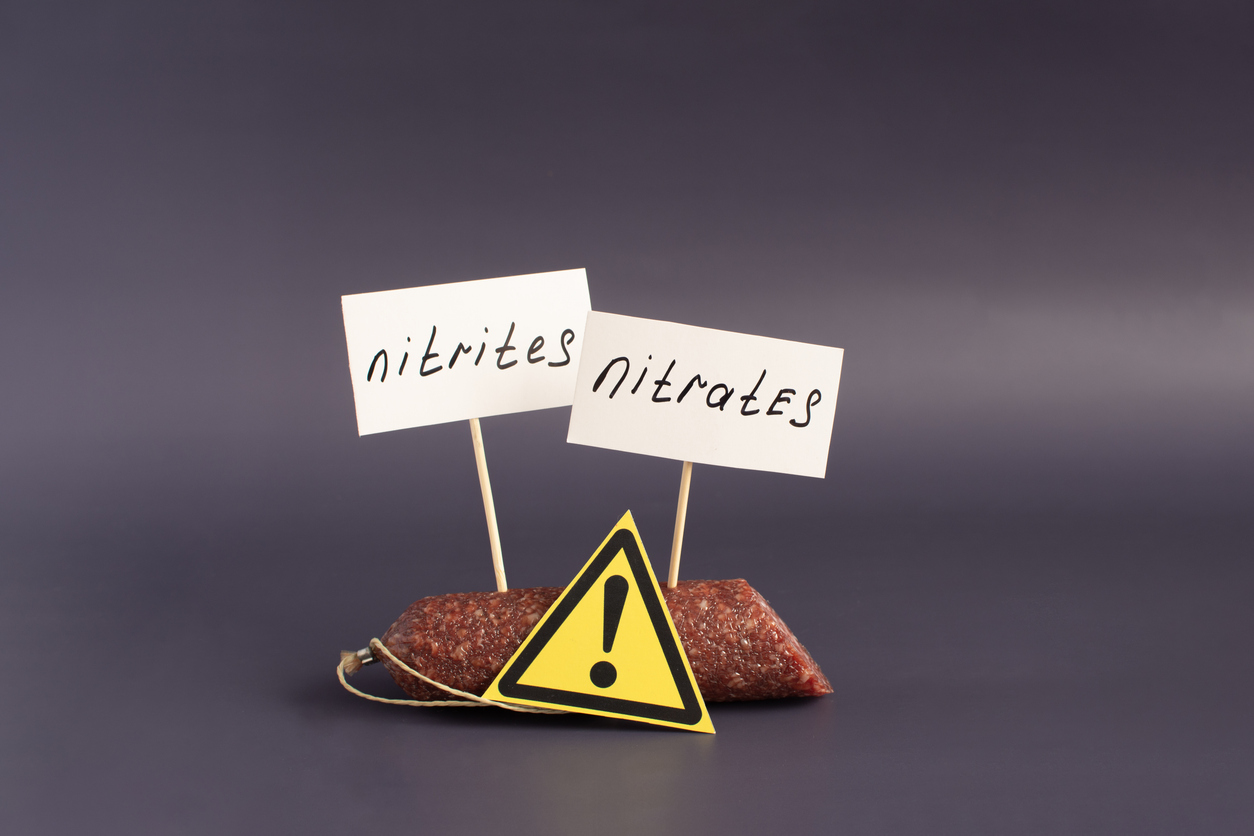
Nitrates, nitrites and NOCs are common in daily life, present even in drinking water in some regions. Nitrates are abundant in vegetables (such, arugula-rocket and spinach), while nitrites are commonly used as preservatives in processed meats. NDMA, one of the most studied NOCs, is present in cured meats, smoked fish and other preserved foods. Once ingested, nitrates can be reduced to nitrites, which then react with amines and amides to form NOCs under physiological conditions. These compounds are well established alkylating agents capable of inducing DNA mutations.
The meta analysis synthesized data from 40 epidemiological studies—both cohort and case control—between 1990 and 2022. The authors examined associations between dietary or waterborne nitrate, nitrite and NDMA and the risk of colorectal, gastric, esophageal and pancreatic cancers. The breadth of the dataset alone makes this one of the most robust analyses available on the topic.
The results highlight that each compound behaves differently depending on the cancer type.
One of the strongest findings concerns nitrite intake. The study reports that high nitrite consumption is significantly associated with gastric cancer (RR = 1.33, 95% CI 1.02–1.73) and esophageal cancer (RR = 1.38, 95% CI 1.01–1.89). These associations were observed primarily for nitrites derived from animal foods, such as processed meats. This aligns with what many of us observe in practice: patients with high processed meat consumption often have multiple overlapping risk factors, but nitrites themselves appear to contribute independently. The acidic environment of the stomach provides ideal conditions for nitrosation reactions, which may explain the stronger associations with upper GI malignancies.
For colorectal cancer, the picture is more specific. Neither nitrate nor nitrite intake alone showed a consistent association with CRC risk. However, dietary NDMA, found in processed meats and certain preserved foods such as bacon, salami and sausages, was significantly associated with increased CRC cancer risk (RR = 1.36, 95% CI 1.18–1.58). This distinction is clinically relevant. It suggests that the carcinogenic potential lies less in the precursor compounds themselves and more in the fully formed NOCs, which patients may ingest directly.
Interestingly, nitrate intake from food or water did not show a consistent association with GI cancers. This may reflect the dual nature of nitrates: while they can contribute to NOC formation, they are also abundant in vegetables, which contain antioxidants and polyphenols that inhibit nitrosation. In other words, a nitrate rich spinach salad does not carry the same risk profile as a nitrate rich cured sausage.
Overall message is clinically relevant: nitrites and NDMA, particularly from processed meats, are associated with increased risks of several GI cancers, while nitrates alone appear less concerning. For patients, especially those with additional risk factors or a family history of GI malignancies, moderating intake of nitrite preserved meats is a reasonable and evidence based approach.
From a practical standpoint, these findings reaffirm public health recommendations to cut back on nitrite cured meats and to choose safer alternatives, such as nitrite free ham labeled “preserved without sodium nitrite.”
Beyond individual foods, this review also strengthens the evidence connecting certain dietary compounds to cancer risk. These insights remind us that prevention begins on our plates. Small, consistent choices in our daily diets can shape long term health and empower each of us to reduce our cancer risk.
About the Author – Carolina Lima Dr.
Carolina Lima, a physician specialized in anesthesiology, has a deep passion for learning and sharing medical knowledge. Dedicated to advancing her field, Dr. Lima strives to bring new evidence-based perspectives to the medical community. Viewing medicine not simply as a profession but as a lifelong journey of learning, Dr. Lima is committed to making complex information clear, practical, and useful for healthcare professionals around the world.
The relationship between diet and gastrointestinal (GI) cancer risk continues to be an area of active investigation, particularly regarding compounds capable of endogenous nitrosation.
A recent systematic review and meta analysis published in Toxics (2023) provides one of the most comprehensive evaluations to date, synthesizing evidence from 40 epidemiological studies linking dietary nitrate, nitrite and N nitroso compounds (NOCs) with major GI malignancies. Because these compounds are basically everywhere, these findings have meaningful implications for clinical practice.
Nitrates, nitrites and NOCs are common in daily life, present even in drinking water in some regions. Nitrates are abundant in vegetables (such, arugula-rocket and spinach), while nitrites are commonly used as preservatives in processed meats. NDMA, one of the most studied NOCs, is present in cured meats, smoked fish and other preserved foods. Once ingested, nitrates can be reduced to nitrites, which then react with amines and amides to form NOCs under physiological conditions. These compounds are well established alkylating agents capable of inducing DNA mutations.
The meta analysis synthesized data from 40 epidemiological studies—both cohort and case control—between 1990 and 2022. The authors examined associations between dietary or waterborne nitrate, nitrite and NDMA and the risk of colorectal, gastric, esophageal and pancreatic cancers. The breadth of the dataset alone makes this one of the most robust analyses available on the topic.
Do all nitrogen compounds carry the same cancer risk?
The results highlight that each compound behaves differently depending on the cancer type.
One of the strongest findings concerns nitrite intake. The study reports that high nitrite consumption is significantly associated with gastric cancer (RR = 1.33, 95% CI 1.02–1.73) and esophageal cancer (RR = 1.38, 95% CI 1.01–1.89). These associations were observed primarily for nitrites derived from animal foods, such as processed meats. This aligns with what many of us observe in practice: patients with high processed meat consumption often have multiple overlapping risk factors, but nitrites themselves appear to contribute independently. The acidic environment of the stomach provides ideal conditions for nitrosation reactions, which may explain the stronger associations with upper GI malignancies.
For colorectal cancer, the picture is more specific. Neither nitrate nor nitrite intake alone showed a consistent association with CRC risk. However, dietary NDMA, found in processed meats and certain preserved foods such as bacon, salami and sausages, was significantly associated with increased CRC cancer risk (RR = 1.36, 95% CI 1.18–1.58). This distinction is clinically relevant. It suggests that the carcinogenic potential lies less in the precursor compounds themselves and more in the fully formed NOCs, which patients may ingest directly.
Interestingly, nitrate intake from food or water did not show a consistent association with GI cancers. This may reflect the dual nature of nitrates: while they can contribute to NOC formation, they are also abundant in vegetables, which contain antioxidants and polyphenols that inhibit nitrosation. In other words, a nitrate rich spinach salad does not carry the same risk profile as a nitrate rich cured sausage.
What does this mean for clinical practice and patient diets?
Overall message is clinically relevant: nitrites and NDMA, particularly from processed meats, are associated with increased risks of several GI cancers, while nitrates alone appear less concerning. For patients, especially those with additional risk factors or a family history of GI malignancies, moderating intake of nitrite preserved meats is a reasonable and evidence based approach.
From a practical standpoint, these findings reaffirm public health recommendations to cut back on nitrite cured meats and to choose safer alternatives, such as nitrite free ham labeled “preserved without sodium nitrite.”
Beyond individual foods, this review also strengthens the evidence connecting certain dietary compounds to cancer risk. These insights remind us that prevention begins on our plates. Small, consistent choices in our daily diets can shape long term health and empower each of us to reduce our cancer risk.
About the Author – Carolina Lima Dr.
Carolina Lima, a physician specialized in anesthesiology, has a deep passion for learning and sharing medical knowledge. Dedicated to advancing her field, Dr. Lima strives to bring new evidence-based perspectives to the medical community. Viewing medicine not simply as a profession but as a lifelong journey of learning, Dr. Lima is committed to making complex information clear, practical, and useful for healthcare professionals around the world.
Last press reviews
Does Nicotinamide Really Prevent Skin Cancer?
By Ana Espino | Published on July 01, 2026 | 4 min read<br><br><br>
Exercising in Extreme Heat: How Can Performance Be Preserved While Reducing Health Risks?

By Ana Espino | Published on June 29, 2026 | 4 min read<br><br><br>
Oropouche Virus: A New Threat to Monitor During Pregnancy?
By Ana Espino | Published on June 26, 2026 | 4 min read<br><br>