2026-03-13
Macrophage “clean-up crew” in the eye: a new lead against glaucoma
Ophthalmology
Glaucoma is one of the leading causes of irreversible blindness worldwide. This condition encompasses a group of optic nerve disorders often associated with increased intraocular pressure. This pressure usually results from an imbalance between the production and drainage of aqueous humor, the fluid circulating inside the eye.
Currently, management primarily relies on lowering this ocular pressure using eye drops, laser therapy, or surgery. However, these approaches do not always prevent disease progression. As Katy Liu, ophthalmologist at Duke University School of Medicine, stated in a press release: “The only way to treat glaucoma is to reduce eye pressure, and yet we still have patients who go blind despite current treatments.”
New research published on March 9 in the journal Immunity provides new insight into the biological mechanisms involved in regulating this pressure, highlighting the unexpected role of specialized immune cells.
The immune system at the core of ocular pressure regulation
The study aimed to determine whether specific populations of immune cells contribute to maintaining the eye’s hydrodynamic balance. Researchers focused on resident macrophages, immune cells permanently present in tissues and known for eliminating cellular debris and pathogens.
Until now, their function in ocular drainage structures had remained unknown. “This research helps us understand the role of the immune system in regulating ocular pressure,” explains Katy Liu.
The hidden role of macrophages
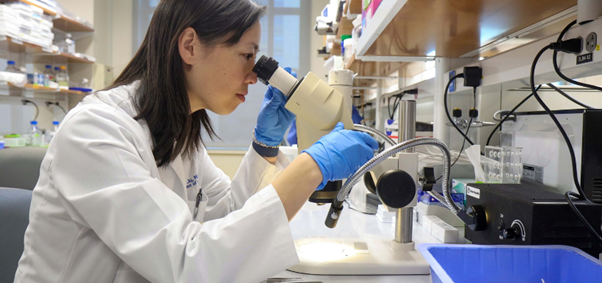
To explore this potential role, researchers used a mouse model in which resident macrophages were labeled with fluorescence. This approach allowed them to precisely track the cells’ location and activity in tissues involved in aqueous humor drainage.
The team then selectively eliminated these cells in order to observe the physiological consequences on intraocular fluid circulation and ocular pressure.
A new therapeutic target for glaucoma
The observations revealed that resident macrophages play a crucial role in maintaining the permeability of the eye’s drainage structures. When these cells were removed, researchers observed blockage of the outflow channel, leading to fluid accumulation and increased intraocular pressure.
“Our results show that resident macrophages are essential for maintaining healthy eye pressure,” says Katy Liu. “Disruption of this system can directly contribute to the development of glaucoma.”
These cells appear to function as a true clean-up crew, removing elements that could obstruct ocular drainage pathways. This function suggests a direct link between tissue immunity and ocular homeostasis.
According to Dr. W. Daniel Stamer, co-senior author of the study: “We now have a precise target for developing new therapies capable of normalizing eye pressure and halting vision loss, unlike current drugs that do not target the source of the disease.”
This work provides new insight into the role of the immune system in the pathophysiology of glaucoma and identifies resident macrophages as key regulators of intraocular pressure. For Daniel Saban, co-senior author, “this discovery represents a major advance in understanding the role of the immune system in regulating ocular pressure.” He also emphasizes that these findings are part of a translational research approach aimed at converting fundamental discoveries into clinical applications.
The next step will be to confirm the presence and function of these macrophages in human ocular tissues. If validated, these findings could open the door to new therapeutic strategies targeting the cellular mechanisms responsible for pressure imbalance, rather than only its consequences. Such an approach could ultimately transform glaucoma management and reduce the risk of blindness associated with this disease.
Read next: Laser and glaucoma: a high-pressure duel
About the Author – Elodie Vaz
Health journalist, CFPJ graduate (2023).
Élodie explores the marks diseases leave on bodies and, more broadly, on human life. A registered nurse since 2010, she spent twelve years at patients’ bedsides before exchanging her stethoscope for a notebook. She now investigates the links between environment and health, convinced that the vitality of life cannot be reduced to that of human.
Source(s) :
Yu Z, et al. Sleep disturbance triggers aberrant activation of vagus circuitry and intestinal stem cell dysfunction. Cell Stem Cell. 2026. Disponible sur: ScienceDirect. ;
AAAS / EurekAlert. Sleep deprivation harms the gut via the vagus nerve, early study reveals. 2026. ;
Last press reviews
Does Nicotinamide Really Prevent Skin Cancer?

By Ana Espino | Published on July 01, 2026 | 4 min read<br><br><br>
Exercising in Extreme Heat: How Can Performance Be Preserved While Reducing Health Risks?

By Ana Espino | Published on June 29, 2026 | 4 min read<br><br><br>
Oropouche Virus: A New Threat to Monitor During Pregnancy?
By Ana Espino | Published on June 26, 2026 | 4 min read<br><br>