2026-03-13
Gut microbiota and colorectal cancer: the cancer’s invisible ally?
Oncology
By Ana Espino | Published on March 13, 2026 | 3 min read
Colorectal cancer (CRC) is among the most common and most lethal cancers worldwide. While established risk factors—diet, obesity, smoking, and physical inactivity—are well recognized, they do not fully explain tumor initiation and progression. Scientific attention has therefore increasingly turned to the intestinal microbiota, a central actor in digestive and immune homeostasis.
The gut microbiota modulates the intestinal barrier, local inflammation, and the production of bioactive metabolites. Dysbiosis, characterized by an alteration in microbial diversity and bacterial composition, may promote a pro-tumorigenic microenvironment. However, the precise nature of the interactions between the microbiota and colorectal epithelial cells remains complex and multifactorial.
This review, recently published in the International Journal of Molecular Sciences, analyzes the mechanisms by which the intestinal microbiota influences CRC initiation, progression, and therapeutic response, highlighting the bacterial species involved and their associated molecular pathways.
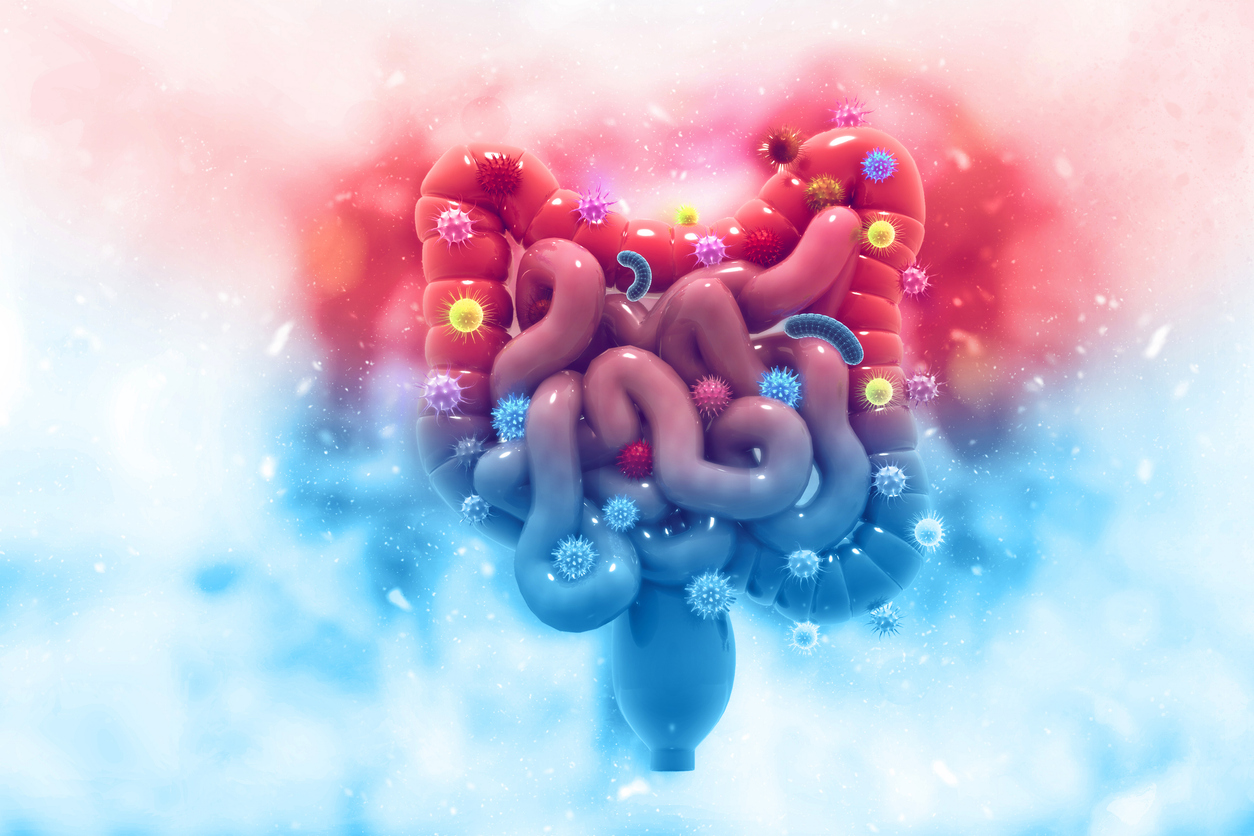
Patients with CRC often exhibit reduced microbial diversity together with an expansion of pro-inflammatory and potentially oncogenic bacteria. Among the most studied species are Fusobacterium nucleatum, colibactin-producing Escherichia coli, and enterotoxigenic Bacteroides fragilis.
Fusobacterium nucleatum promotes cellular adhesion, activates the Wnt/β-catenin signaling pathway, and stimulates tumor proliferation. Certain strains of E. coli produce colibactin, a genotoxin that induces DNA double-strand breaks. Bacteroides fragilis secretes a toxin capable of activating the NF-κB pathway, thereby amplifying chronic inflammation.
At the same time, the reduction of butyrate-producing bacteria—short-chain fatty acid producers with anti-inflammatory and anti-proliferative properties—weakens epithelial protection. This loss promotes increased intestinal permeability and sustained immune activation.
The microbiota also influences the tumor microenvironment and responses to treatment. Certain bacterial profiles are associated with improved responses to chemotherapy or immunotherapy, suggesting a potential prognostic and predictive role.
Colorectal cancer results from complex interactions between genetics, environment, and immunity. This review aimed to clarify the role of the intestinal microbiota in colorectal carcinogenesis.
The data indicate that certain pro-inflammatory and genotoxic bacteria actively contribute to tumor initiation, while the loss of protective species promotes an environment conducive to disease progression. The microbiota therefore appears to act as a dynamic cofactor in tumorigenesis and may also influence therapeutic response.
However, most available data remain observational. Establishing causality and ensuring interindividual reproducibility will require robust, standardized longitudinal studies.
In the longer term, identifying specific microbial signatures, developing targeted modulation strategies—such as probiotics, prebiotics, or fecal microbiota transplantation—and integrating microbiota analysis into screening algorithms could transform the prevention and management of colorectal cancer.
About the author – Ana Espino
PhD in Immunology, specialized in Virology
As a scientific writer, Ana is passionate about bridging the gap between research and real-world impact. With expertise in immunology, virology, oncology, and clinical studies, she makes complex science clear and accessible. Her mission: to accelerate knowledge sharing and empower evidence-based decisions through impactful communication.
Colorectal cancer (CRC) is among the most common and most lethal cancers worldwide. While established risk factors—diet, obesity, smoking, and physical inactivity—are well recognized, they do not fully explain tumor initiation and progression. Scientific attention has therefore increasingly turned to the intestinal microbiota, a central actor in digestive and immune homeostasis.
The gut microbiota modulates the intestinal barrier, local inflammation, and the production of bioactive metabolites. Dysbiosis, characterized by an alteration in microbial diversity and bacterial composition, may promote a pro-tumorigenic microenvironment. However, the precise nature of the interactions between the microbiota and colorectal epithelial cells remains complex and multifactorial.
This review, recently published in the International Journal of Molecular Sciences, analyzes the mechanisms by which the intestinal microbiota influences CRC initiation, progression, and therapeutic response, highlighting the bacterial species involved and their associated molecular pathways.
Do certain bacteria trigger cancer?
Patients with CRC often exhibit reduced microbial diversity together with an expansion of pro-inflammatory and potentially oncogenic bacteria. Among the most studied species are Fusobacterium nucleatum, colibactin-producing Escherichia coli, and enterotoxigenic Bacteroides fragilis.
Fusobacterium nucleatum promotes cellular adhesion, activates the Wnt/β-catenin signaling pathway, and stimulates tumor proliferation. Certain strains of E. coli produce colibactin, a genotoxin that induces DNA double-strand breaks. Bacteroides fragilis secretes a toxin capable of activating the NF-κB pathway, thereby amplifying chronic inflammation.
At the same time, the reduction of butyrate-producing bacteria—short-chain fatty acid producers with anti-inflammatory and anti-proliferative properties—weakens epithelial protection. This loss promotes increased intestinal permeability and sustained immune activation.
The microbiota also influences the tumor microenvironment and responses to treatment. Certain bacterial profiles are associated with improved responses to chemotherapy or immunotherapy, suggesting a potential prognostic and predictive role.
Restoring balance for prevention
Colorectal cancer results from complex interactions between genetics, environment, and immunity. This review aimed to clarify the role of the intestinal microbiota in colorectal carcinogenesis.
The data indicate that certain pro-inflammatory and genotoxic bacteria actively contribute to tumor initiation, while the loss of protective species promotes an environment conducive to disease progression. The microbiota therefore appears to act as a dynamic cofactor in tumorigenesis and may also influence therapeutic response.
However, most available data remain observational. Establishing causality and ensuring interindividual reproducibility will require robust, standardized longitudinal studies.
In the longer term, identifying specific microbial signatures, developing targeted modulation strategies—such as probiotics, prebiotics, or fecal microbiota transplantation—and integrating microbiota analysis into screening algorithms could transform the prevention and management of colorectal cancer.
Read next: Colorectal cancer: mRNA nanobodies open a new avenue in immunotherapy
About the author – Ana Espino
PhD in Immunology, specialized in Virology
As a scientific writer, Ana is passionate about bridging the gap between research and real-world impact. With expertise in immunology, virology, oncology, and clinical studies, she makes complex science clear and accessible. Her mission: to accelerate knowledge sharing and empower evidence-based decisions through impactful communication.
Last press reviews
Does Nicotinamide Really Prevent Skin Cancer?

By Ana Espino | Published on July 01, 2026 | 4 min read<br><br><br>
Exercising in Extreme Heat: How Can Performance Be Preserved While Reducing Health Risks?

By Ana Espino | Published on June 29, 2026 | 4 min read<br><br><br>
Oropouche Virus: A New Threat to Monitor During Pregnancy?

By Ana Espino | Published on June 26, 2026 | 4 min read<br><br>